The Gibson App Review 2026: Is It Still the Best Guitar Learning App for Beginners?
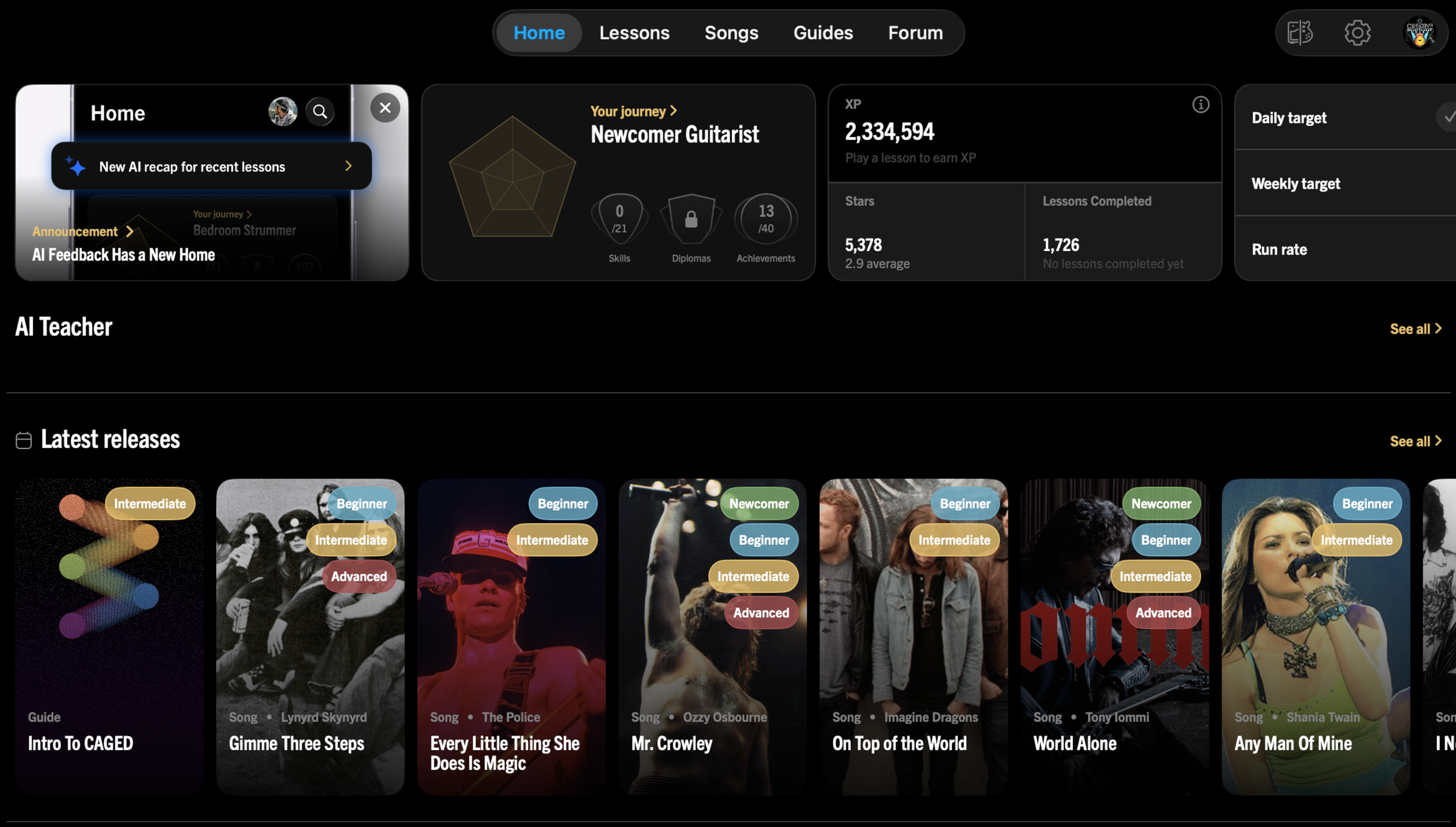
Disclosure: I’m a Gibson App affiliate, which means I earn a small commission if you sign up through my links, at no extra cost to you. Zoundio also gave me complimentary access to complete this in-depth review. That doesn’t change what I write — I’ve been paying attention to this app since long before I became an affiliate, and this review is based on my own experience across every device I own.
Quick summary and verdict
Score: 9.5/10
The Gibson App is still my top pick for anyone starting or restarting guitar in 2026. It pairs real-time listening feedback with a gamified, song-based learning path, and since I last wrote about it, it's added a proper skill-tracking system, an in-app community, and a whole new wellbeing-focused side to its marketing. It's best for beginners and mobile-first learners who want fun over classroom rigour — less so for advanced players chasing music theory depth or a huge, varied song library. The content is constantly evolving though, so it wouldn’t surprise me if they close this gap in the future.
At a glance:
• Price: Premium: £16.99/month or £99.99/year | Premium+: £19.99/month or £119.99/year (US: $19.99/mo or $119.99/yr Premium; $24.99/mo or $159.99/yr Premium+).
• Instruments: Guitar only.
• Platforms: iOS and Android, though several headline features are iOS-only for now.
• Best for: Beginner to early intermediate, thinning out for advanced players.
Who this app is for (and not for)
It’s a great fit if you are:
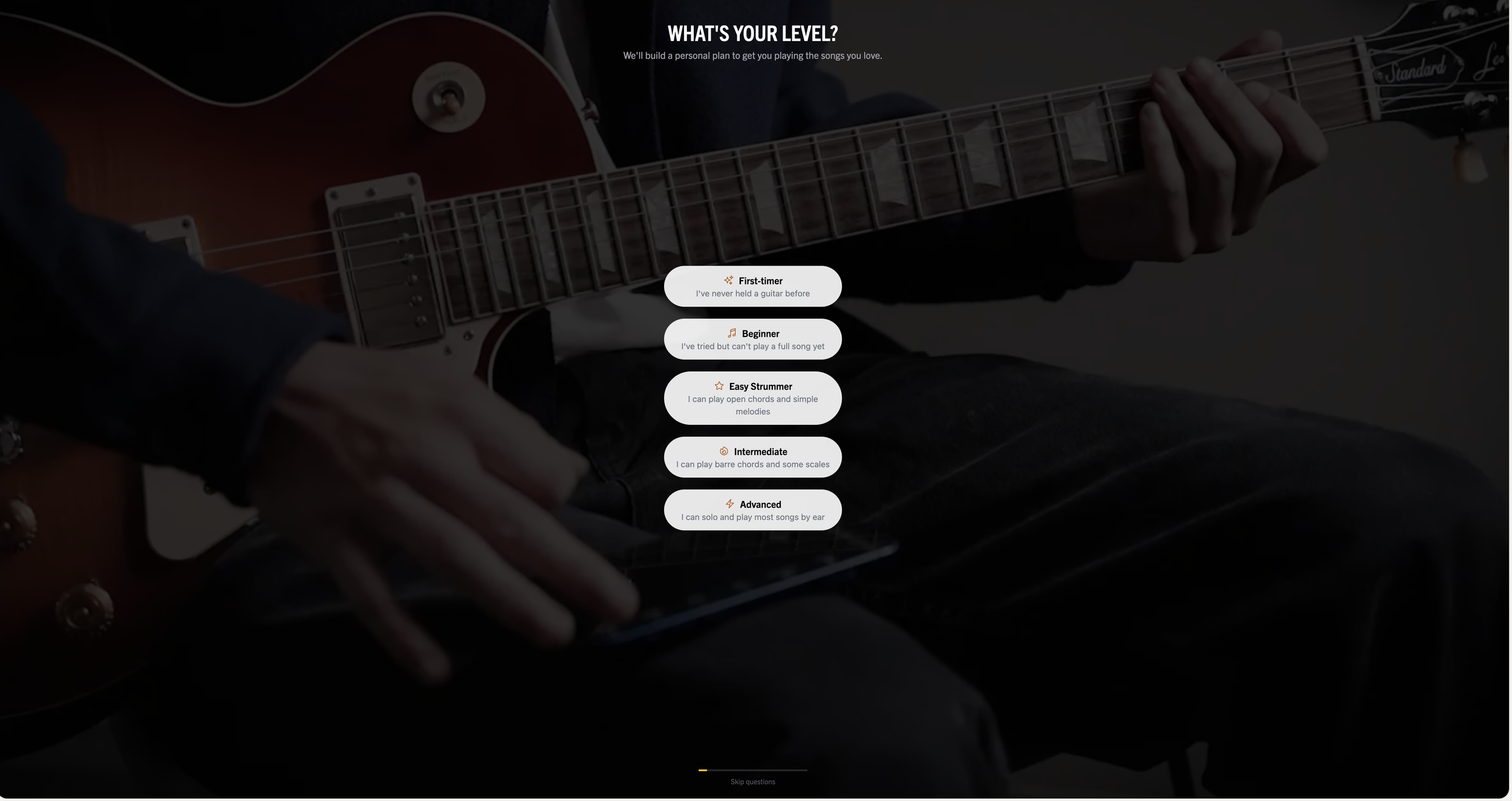
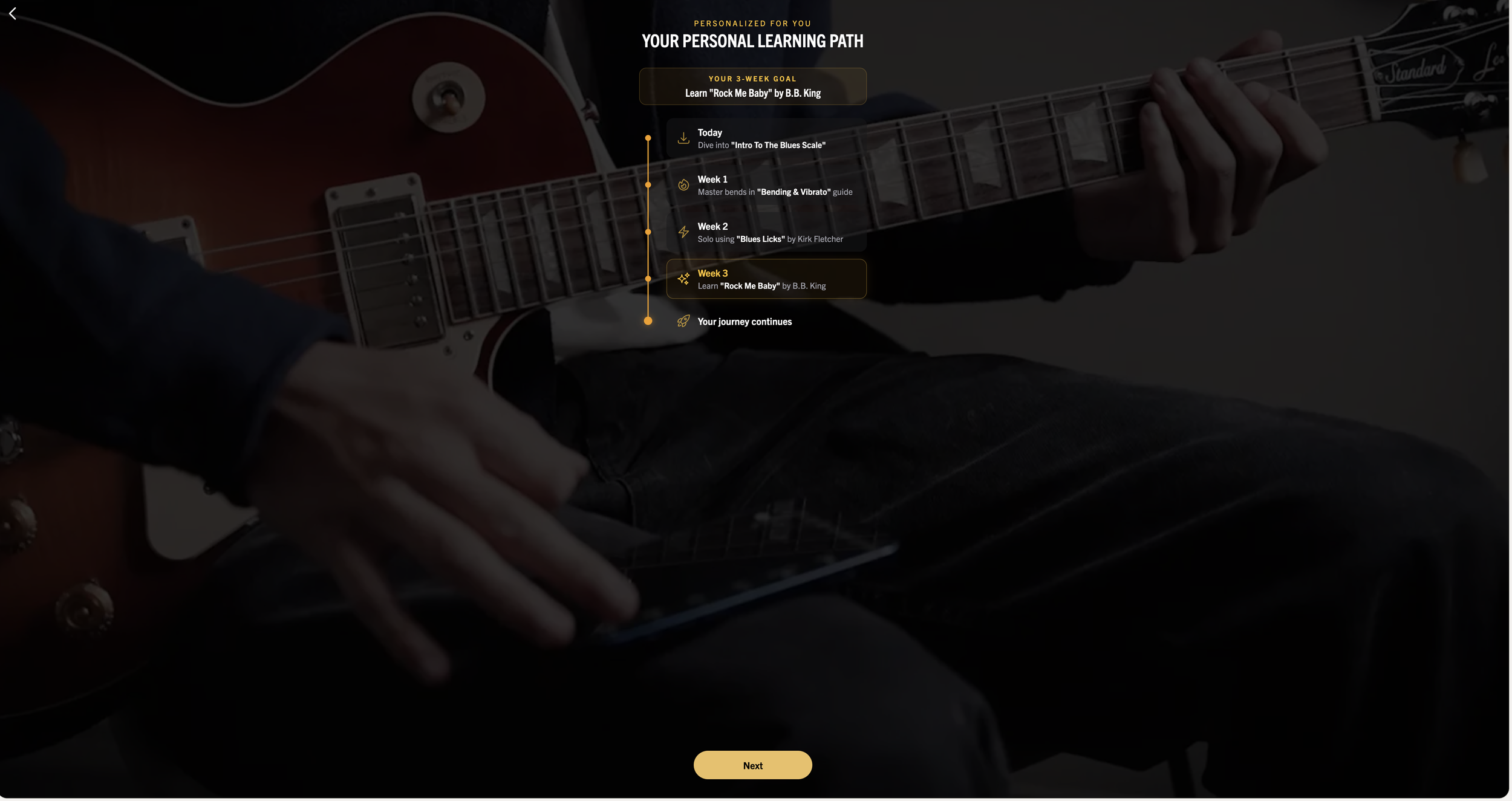
• A complete beginner or late beginner who wants a clear path without having to plan your own practice.
• Someone who's tried guitar before and lost momentum — the gamification genuinely helps with consistency.
• A mobile-first learner who wants to practise in short bursts rather than sit through long video lessons.
• Someone who responds well to structure, feedback, and visible progress rather than open-ended exploration.
It’s probably not right if you are:
• An advanced player looking for real depth in theory, improvisation, or genre-specific technique — you’ll be hitting a content ceiling sooner than you’d like. I’d recommend Pickup Music if that sounds like you.
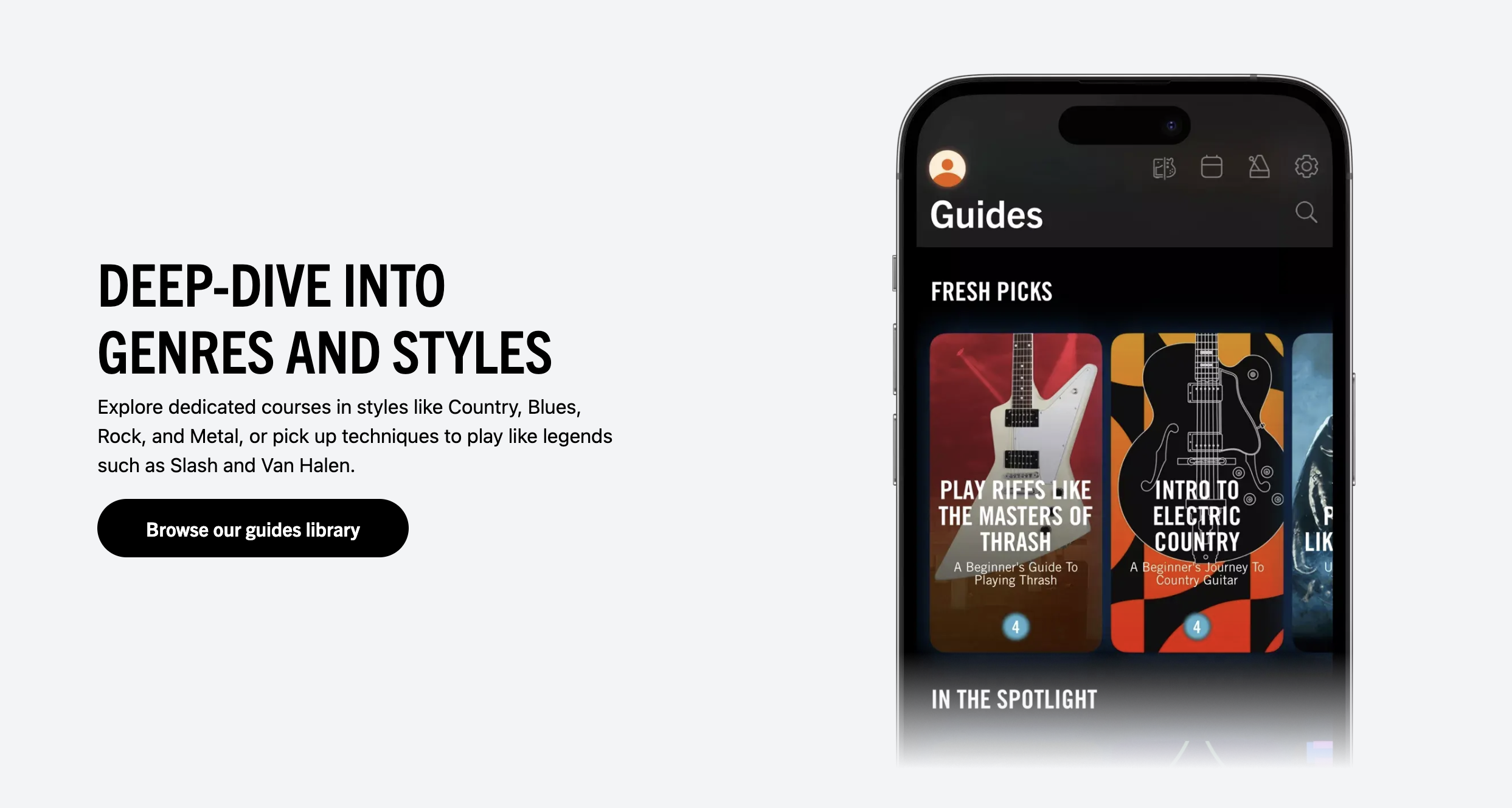
• You want a big, varied song library across genres — it's still rock and blues-heavy, with thin jazz, classical, and modern chart content. But with their artist submission programme, this could change quite rapidly.
• You're on Android and want full feature parity — Leagues, the Digital Amp, Stop & Go, Continue Playing, and AI Personalised Feedback remain iOS-only.
How the app teaches
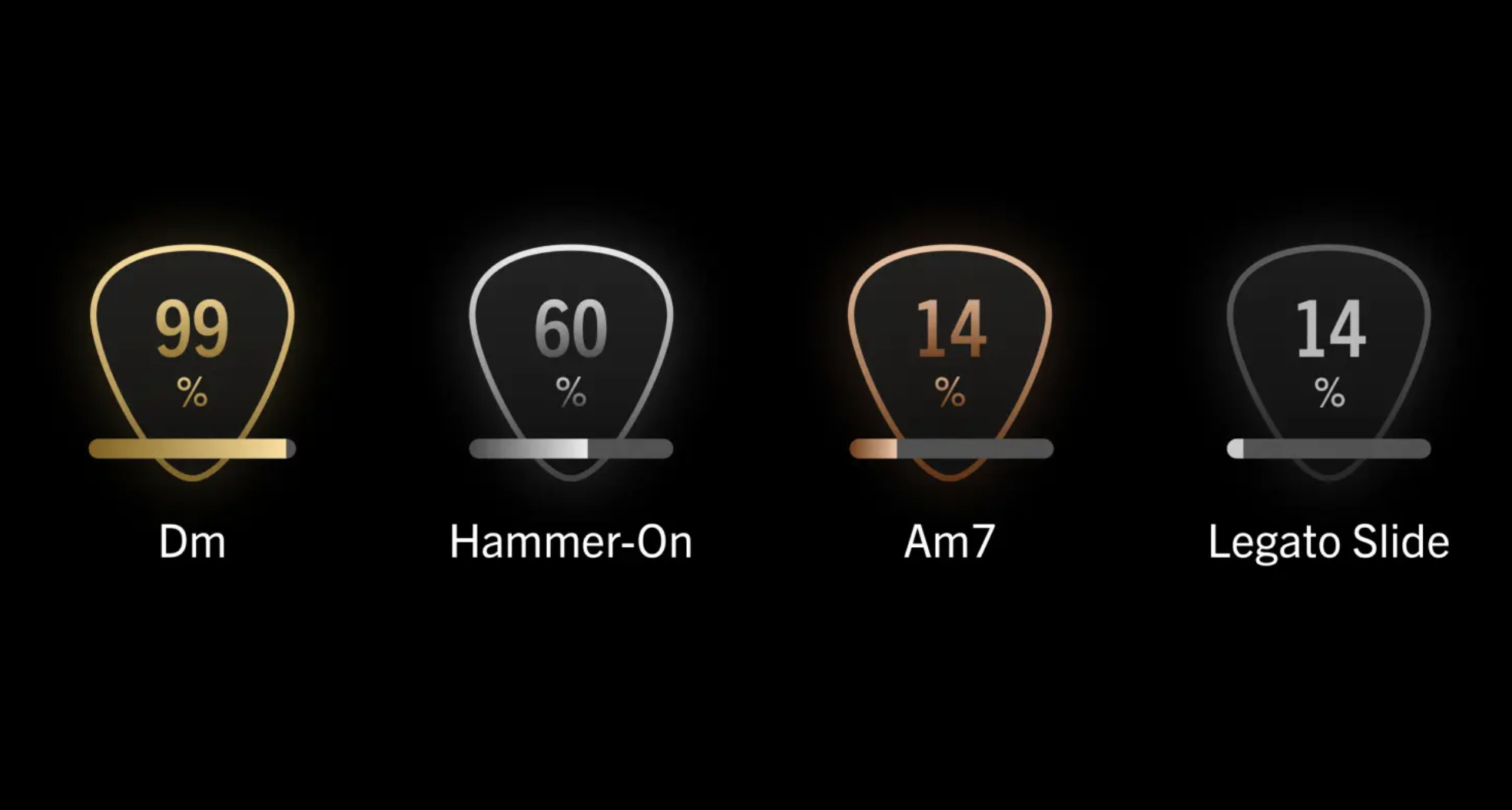
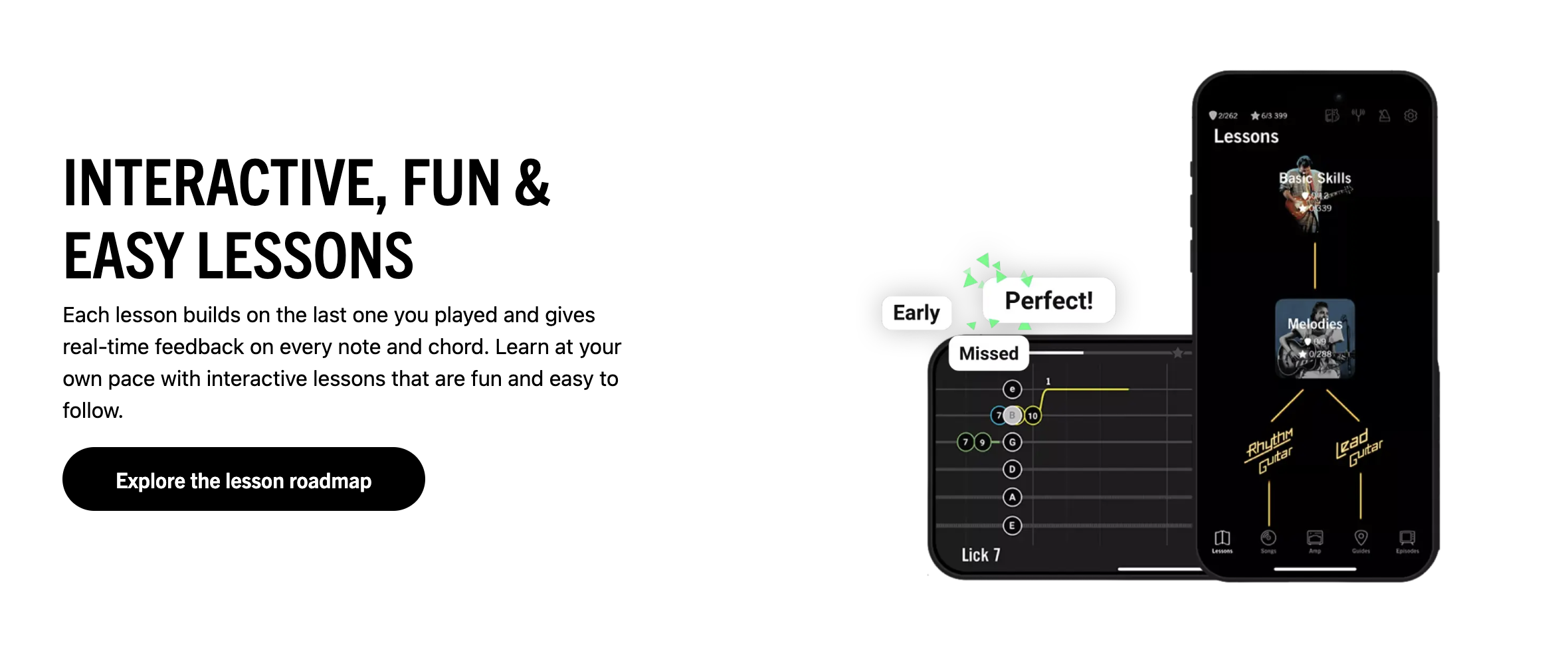
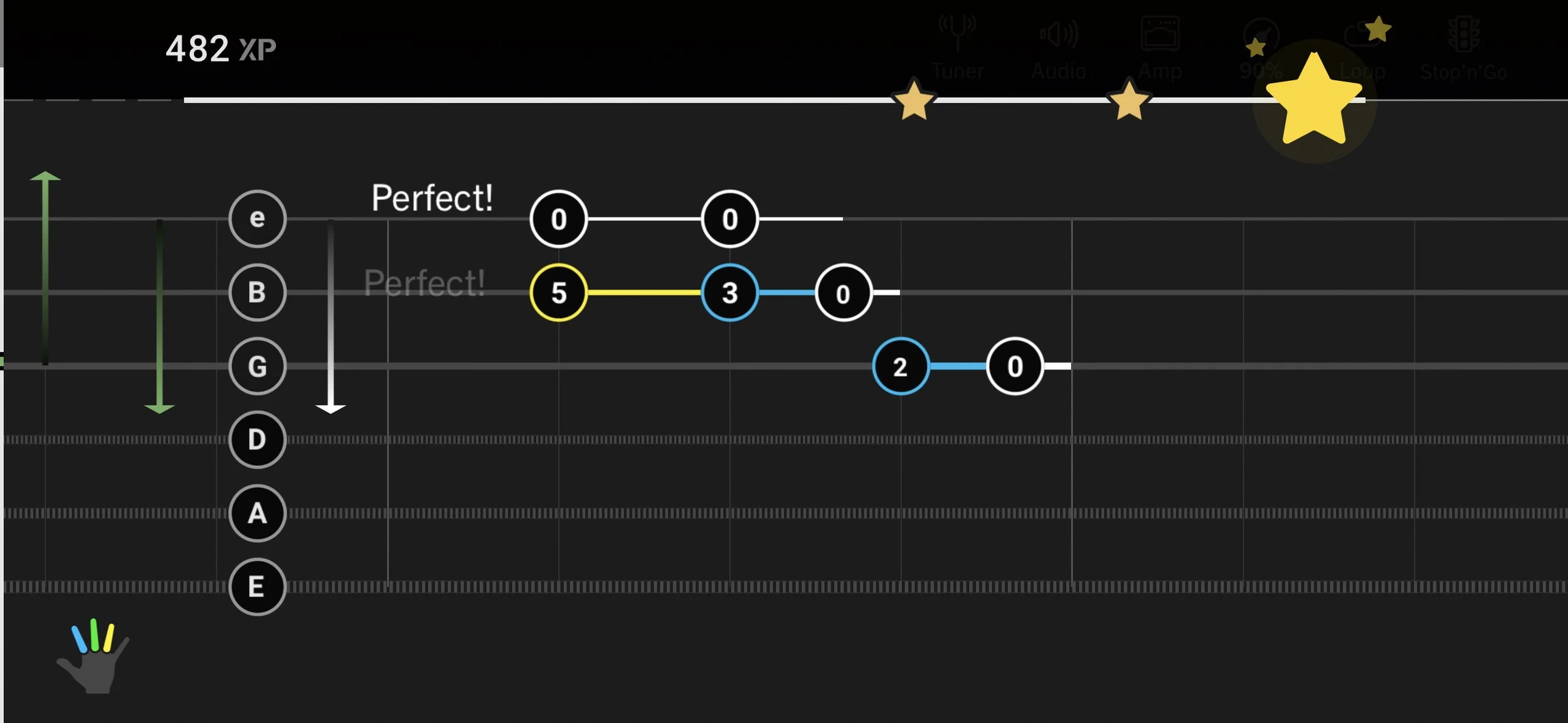
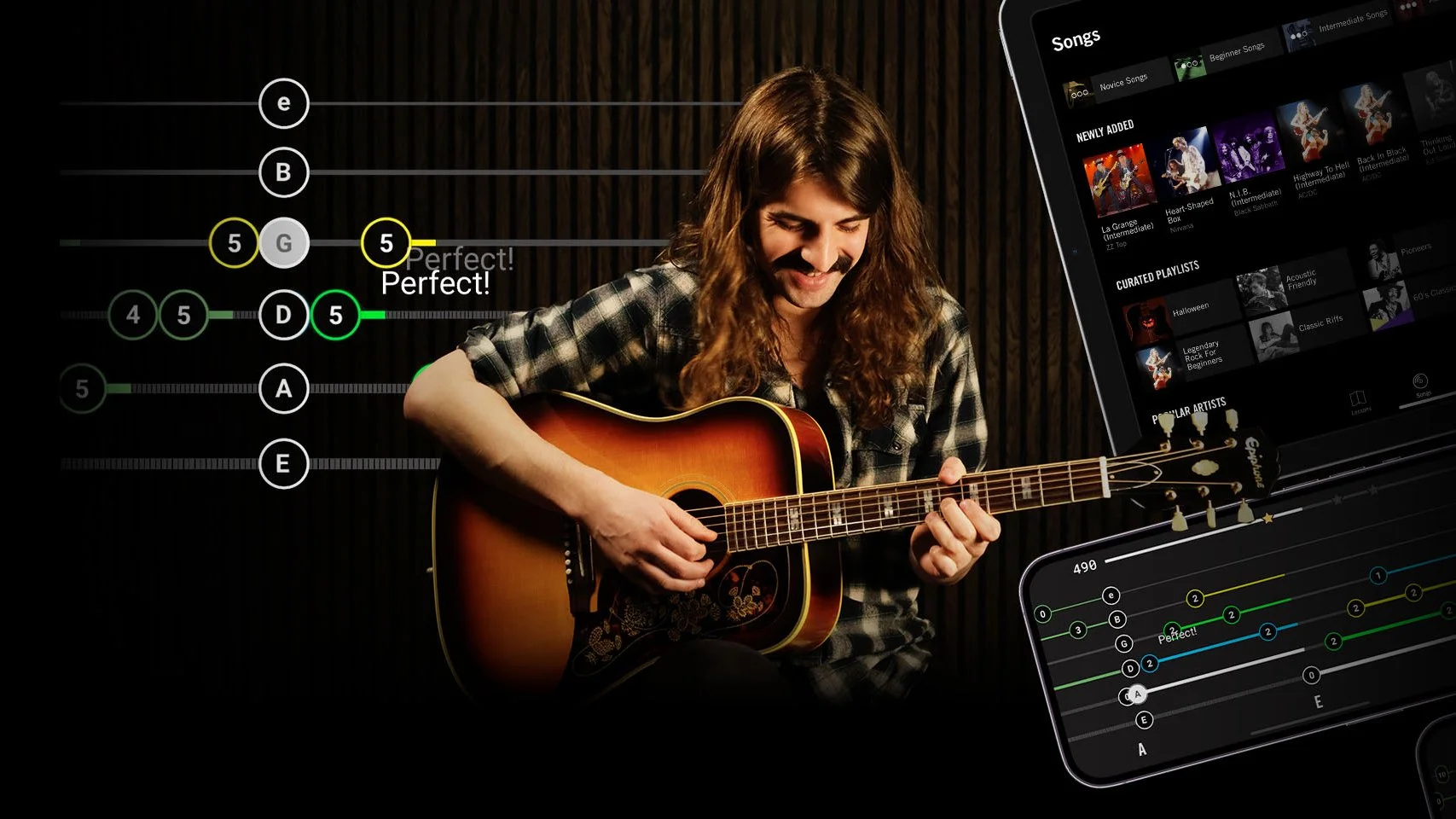
The core model hasn't changed: real-time audio listening (using your phone or tablet’s mic) tracks what you're actually playing and gives instant feedback on timing and accuracy, wrapped in a gamified structure of leagues, streaks, and unlockable content.
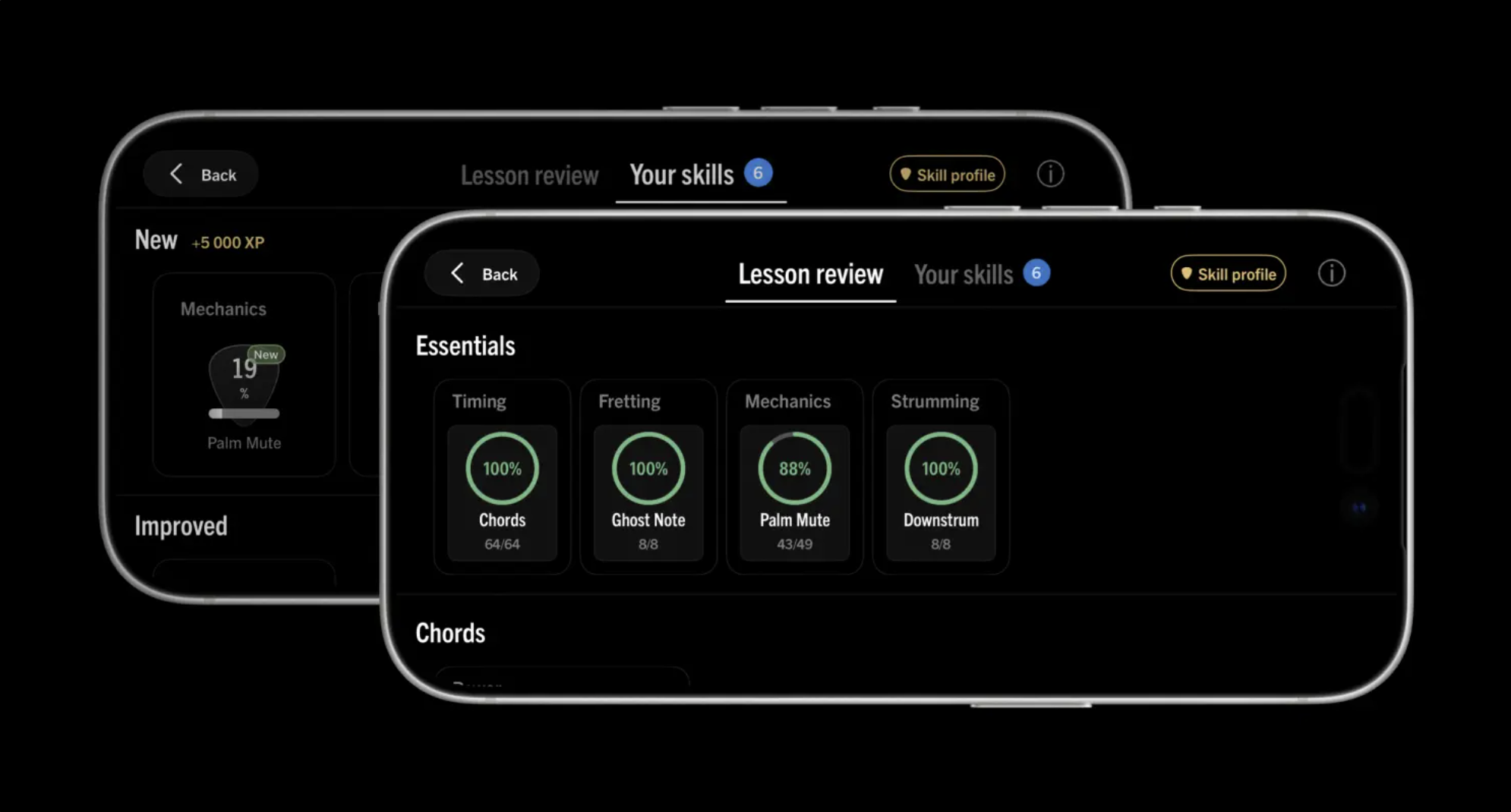
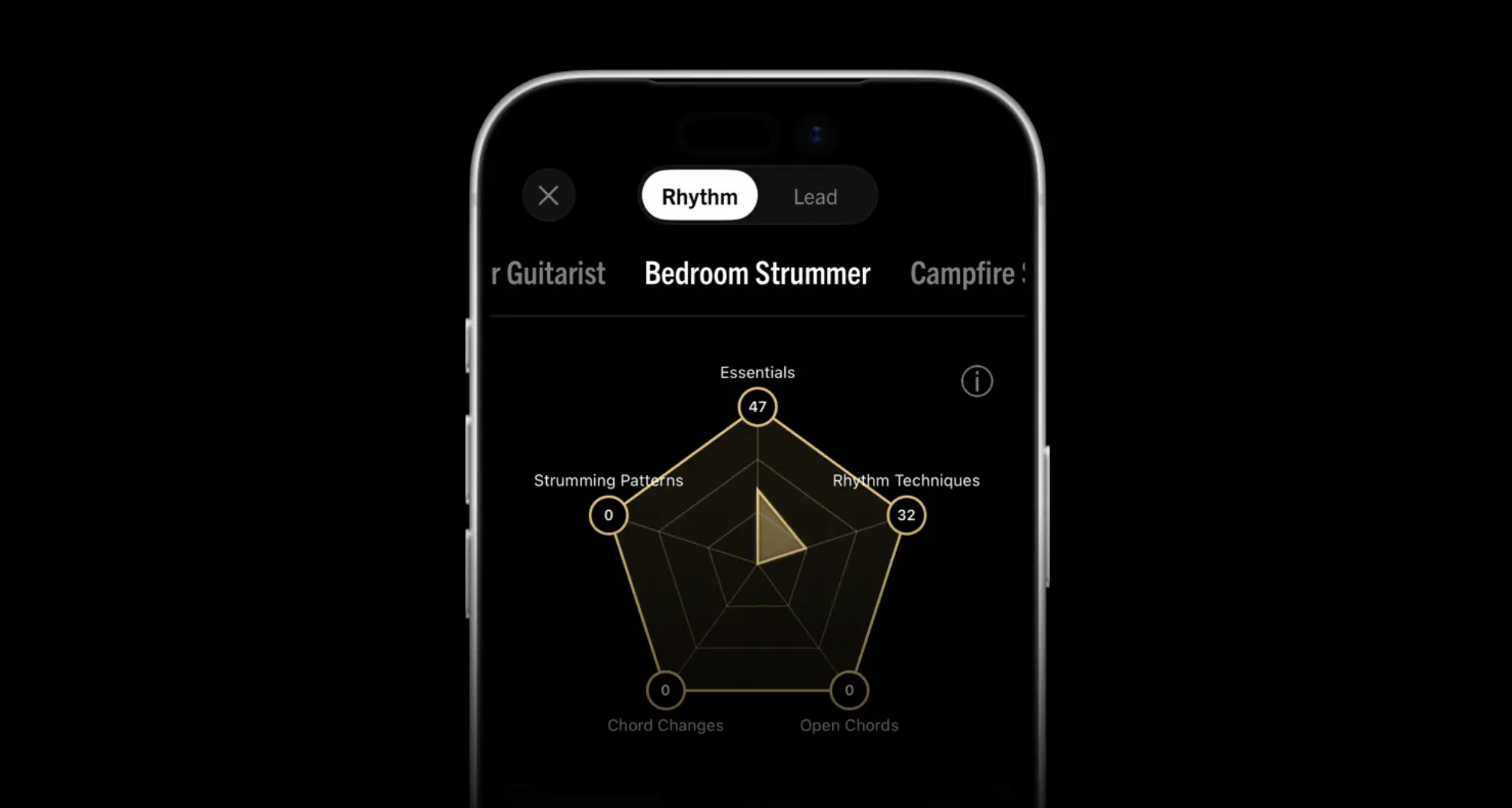
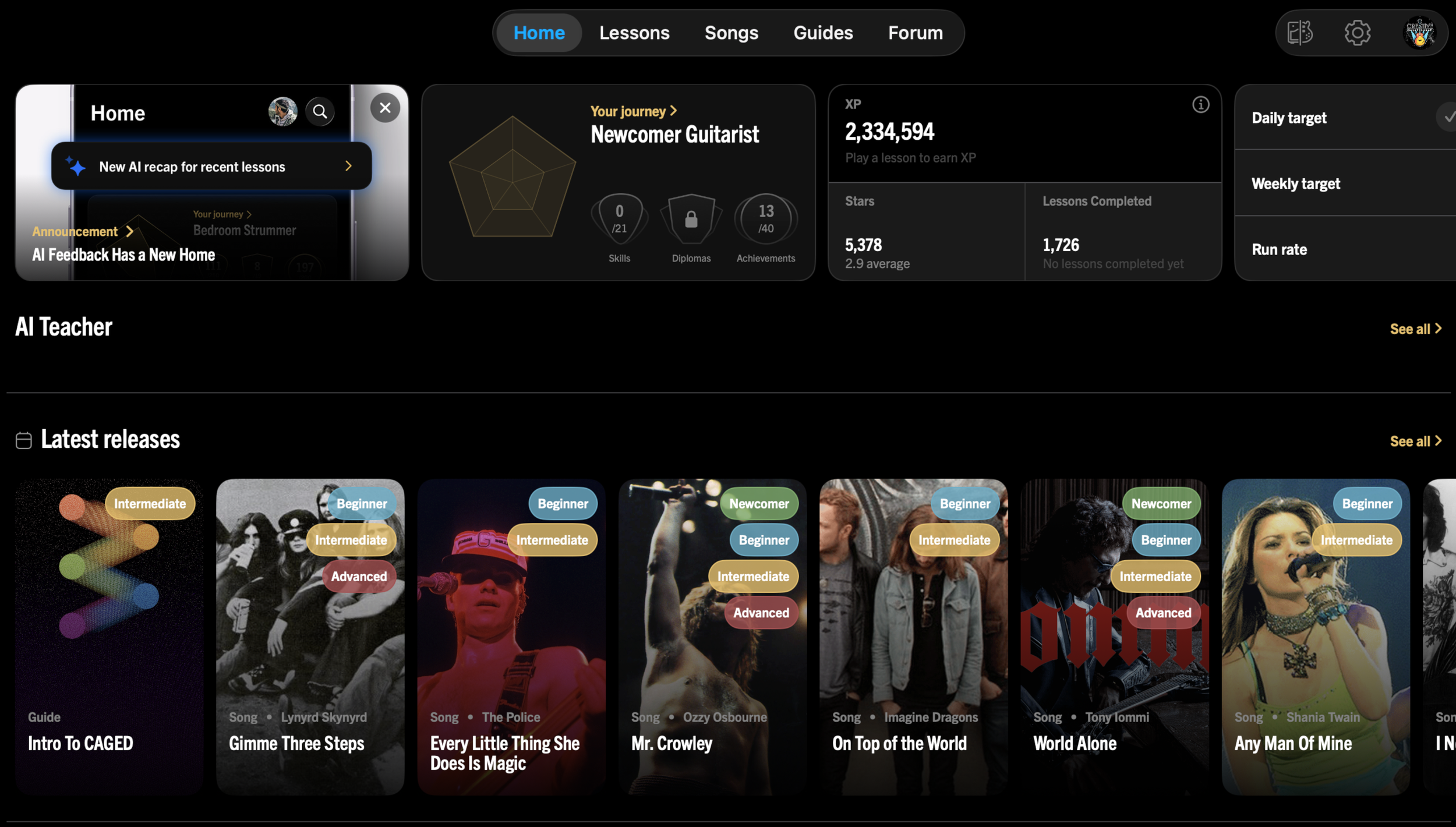
What is new is a proper Skills & Achievements system that tracks around 270 discrete guitar skills, from basic chord shapes up through more advanced technique, and shows you real progress data rather than just a vague sense of "getting better." It's a genuinely useful addition if you like seeing concrete evidence of improvement, and it fits neatly alongside the existing gamification rather than replacing it.
Key features and experience
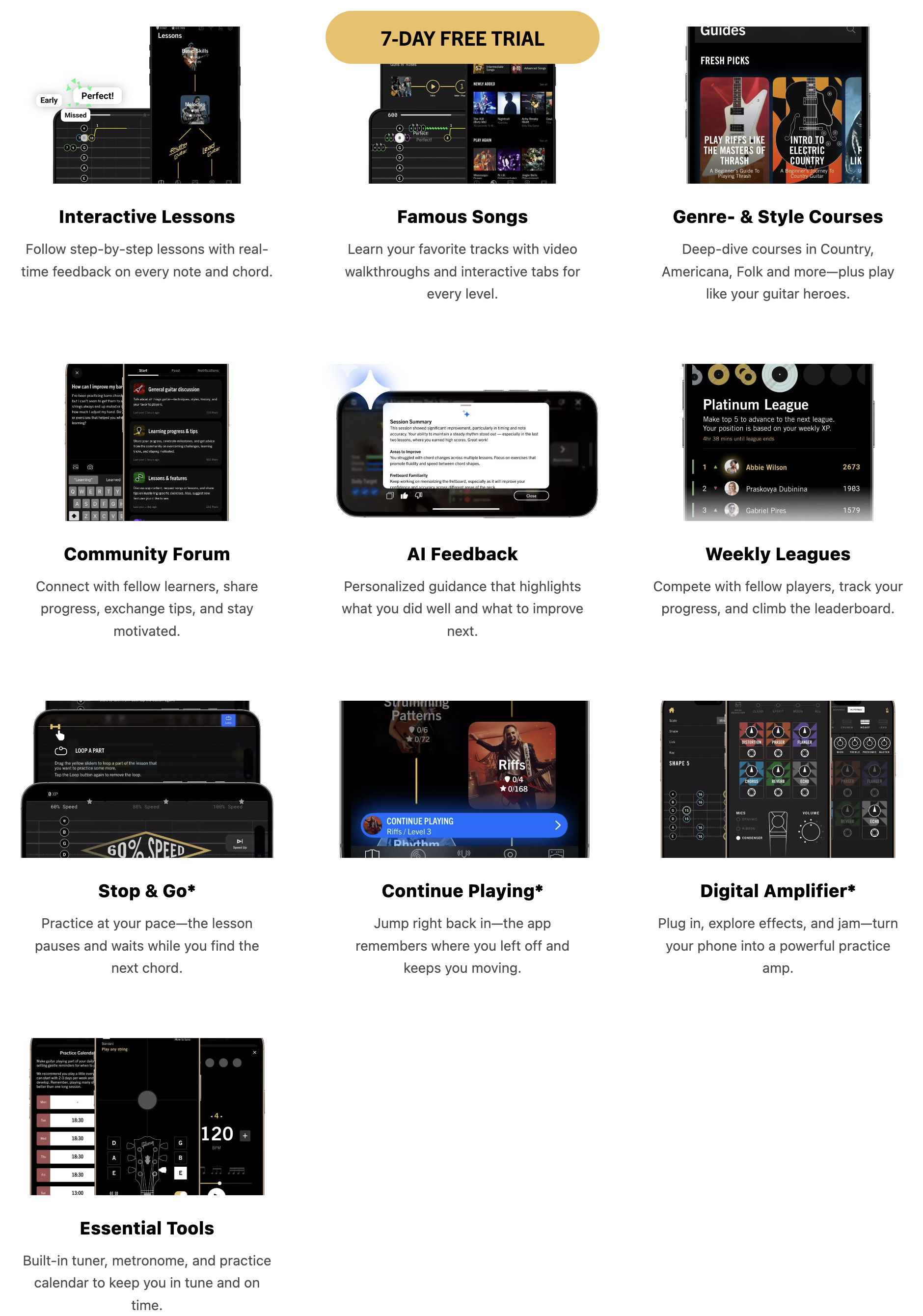
• Real-time note and chord recognition — still the app's core strength, syncing your playing with interactive tabs and backing tracks. No other app does this better than the Gibson App.
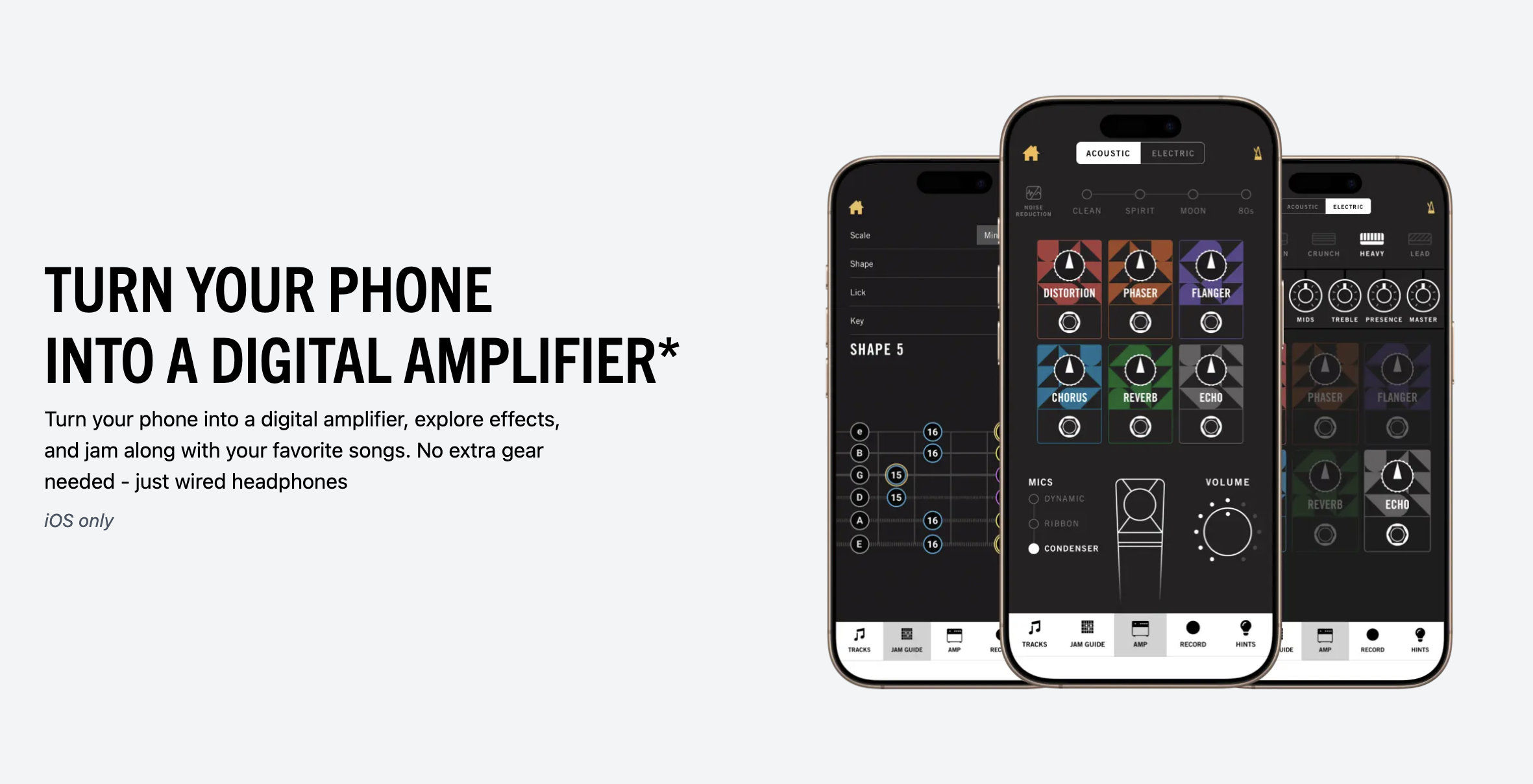
• Digital Amp and pedal modelling — shape your tone without extra gear (iOS only).
• Skills & Achievements tracking — new since my last review, roughly 270 skills tracked with visible progress.
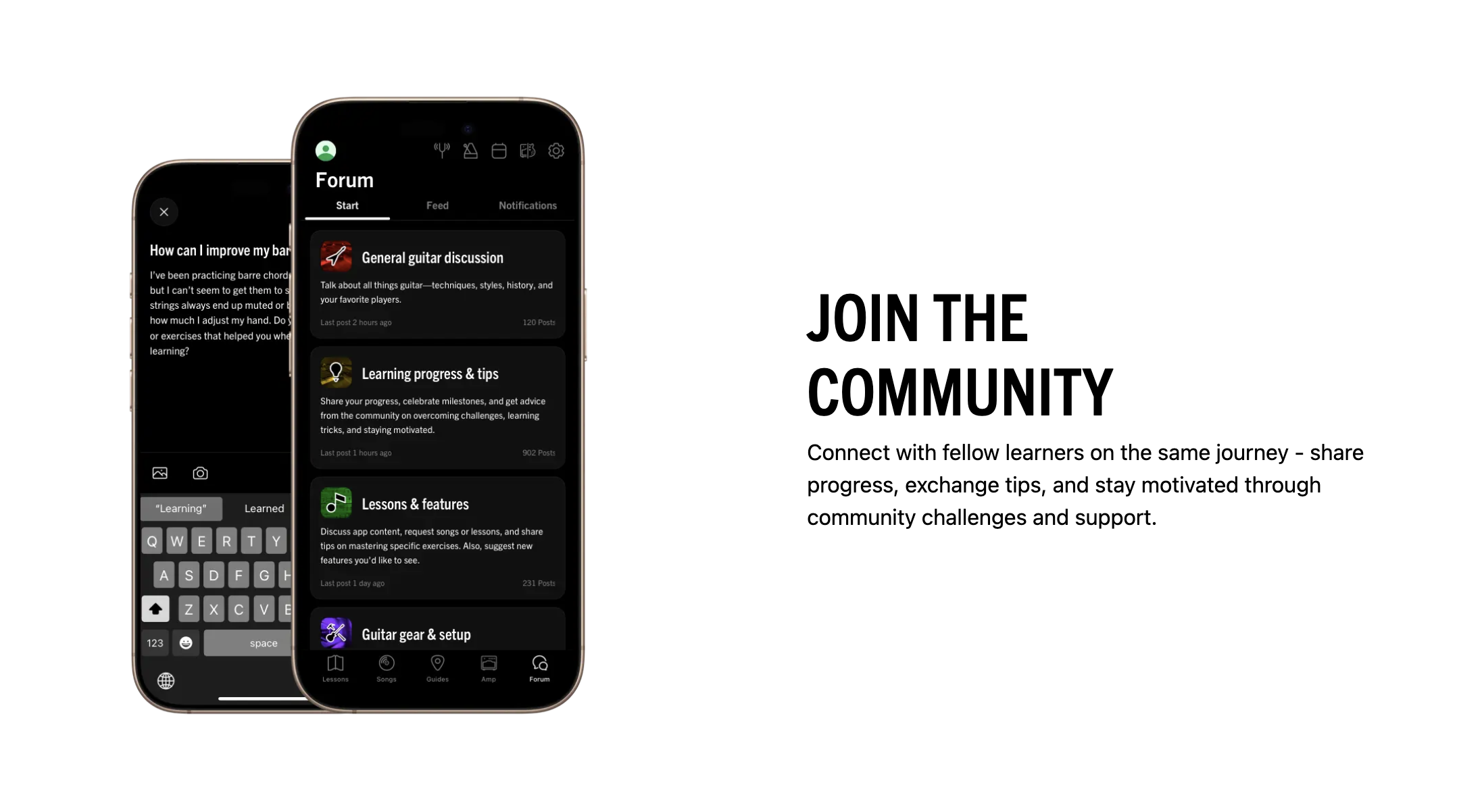
• Community/forum — launched in late 2025, a non-competitive space to ask questions on technique, gear, and tips, with instructor Jamie Humphries active in there.
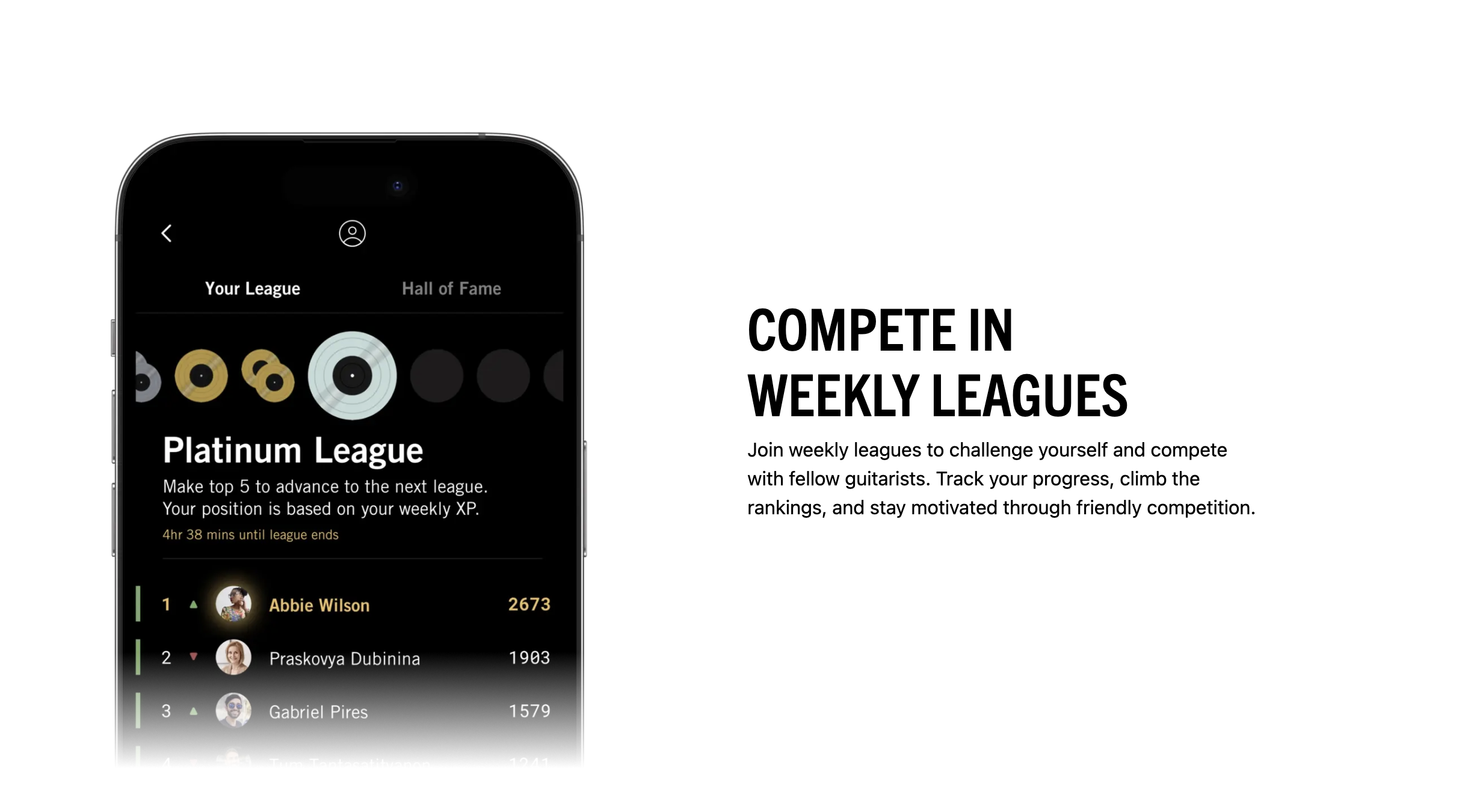
• Leagues and streaks — the gamification backbone, though your progress no longer resets if you take a break, which is a welcome, less guilt-driven approach.
• Song-based learning — real songs from your first session rather than weeks of isolated exercises.
• Slick, polished design — still, in my view, the best-looking app in this space.
Platform experience remains strong on iOS specifically; Android users get a noticeably lighter version of the app.
Strengths
• Genuinely addictive in a good way — the gamification keeps you coming back more consistently than most alternatives I've tried.
• Excellent real-time feedback — the note recognition is reliable for most playing and makes practice feel responsive rather than passive.
• Visible, trackable progress — the new skills system gives you concrete data on what you've actually improved.
• Constantly evolving — between the community, the skills tracking, and now the wellbeing content, this doesn't feel like a static app you'll outgrow in a few months.
• Approachable for total beginners — the under-5-minutes-to-your-first-sound design genuinely lowers the barrier to picking up a guitar. It’s also done in an adult-friendly manner that doesn’t make later learners feel like they’re using a app made for children.
Limitations and trade-offs
• Advanced players will hit a ceiling — multiple independent reviews and my own view agree the content thins out once you're past early intermediate.
• Song library is still narrow in places — rock and blues-focused, with limited jazz, classical, or current chart material, and it's explicitly disclosed that the catalogue can vary by location.
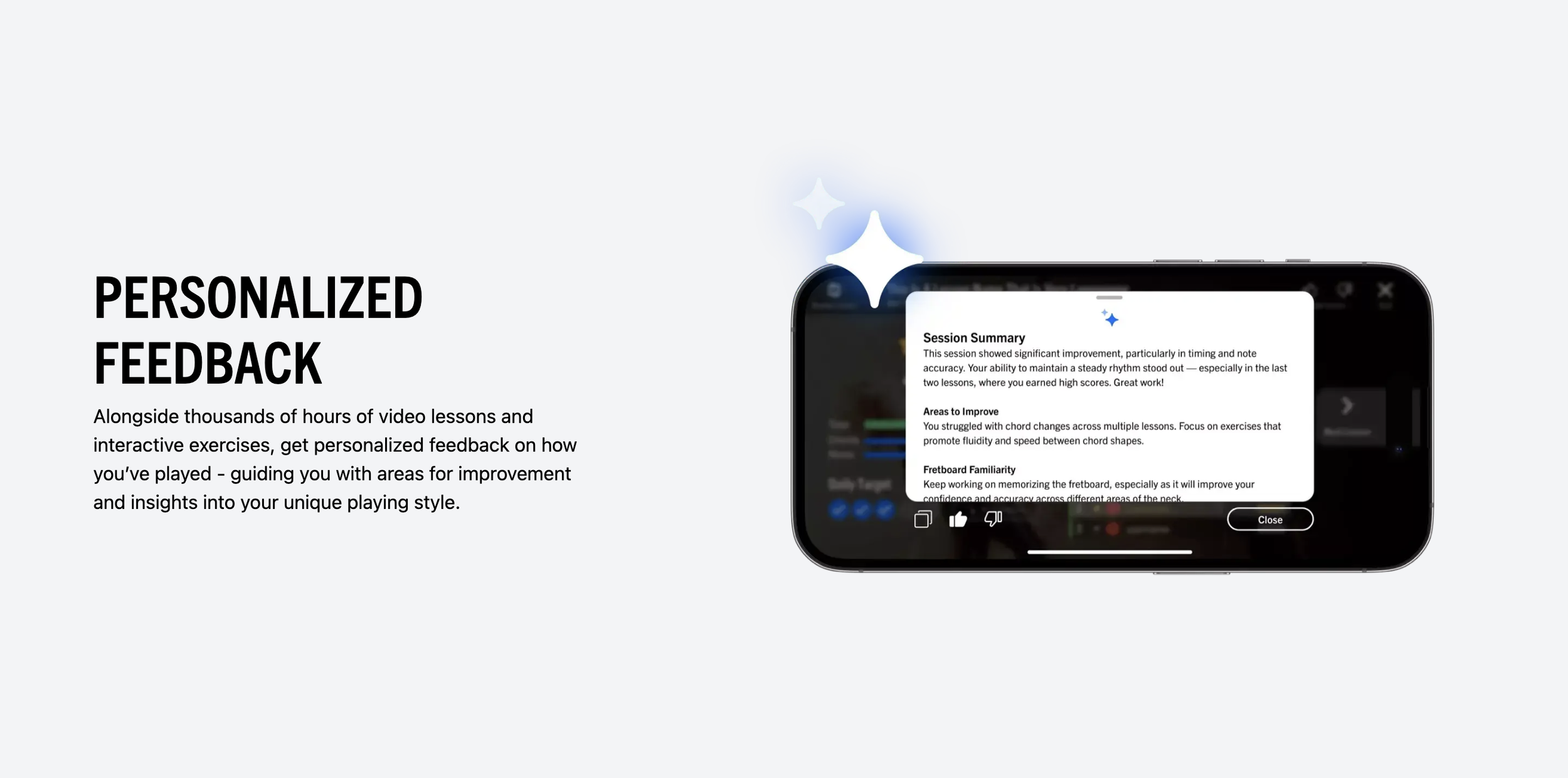
• Feature parity issues on Android — several of the best features (Leagues, Digital Amp, AI Personalised Feedback) remain iOS-exclusive.
• Mic reliability quirks — some users report issues with Bluetooth headphones interfering with pickup, and loud rooms affecting scoring accuracy.
• Pricing tier confusion — this is the one I'd flag most strongly: what's included in Premium versus Premium+ isn't always obvious before you buy, and it's caused real frustration for some users (more below).
Pricing, trials and value for money
Pricing sits at two tiers:
Premium: £16.99/month or £99.99/year (UK) | $19.99/month or $119.99/year (US)
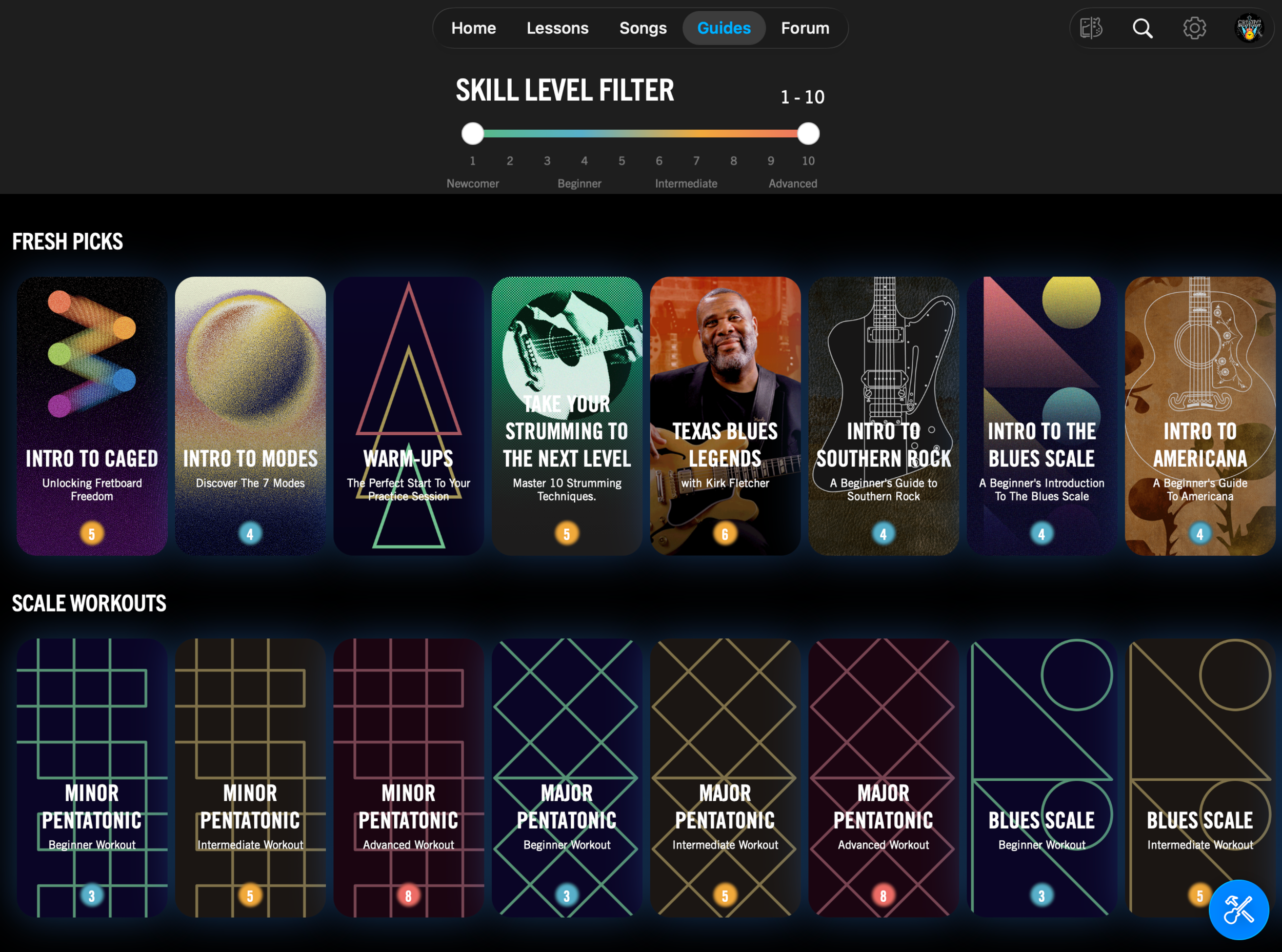
Premium+: £19.99/month or £119.99/year (UK) | $24.99/month or $159.99/year (US) — this tier adds "famous songs" and exclusive artist lessons
The free trial is 7 days and only available on yearly plans, one per user, with no Family Sharing support. If you sign up on a monthly plan, there's no trial at all, which has caught some people out.
Here's the part worth being upfront about: I've seen a genuine, recurring complaint from users who subscribed expecting access to popular songs, only to find that content locked behind the pricier Premium+ tier — with the additional cost not made obvious until after they'd already committed to a year. If a specific song or artist is the reason you're subscribing, check which tier includes it before you buy, not after.
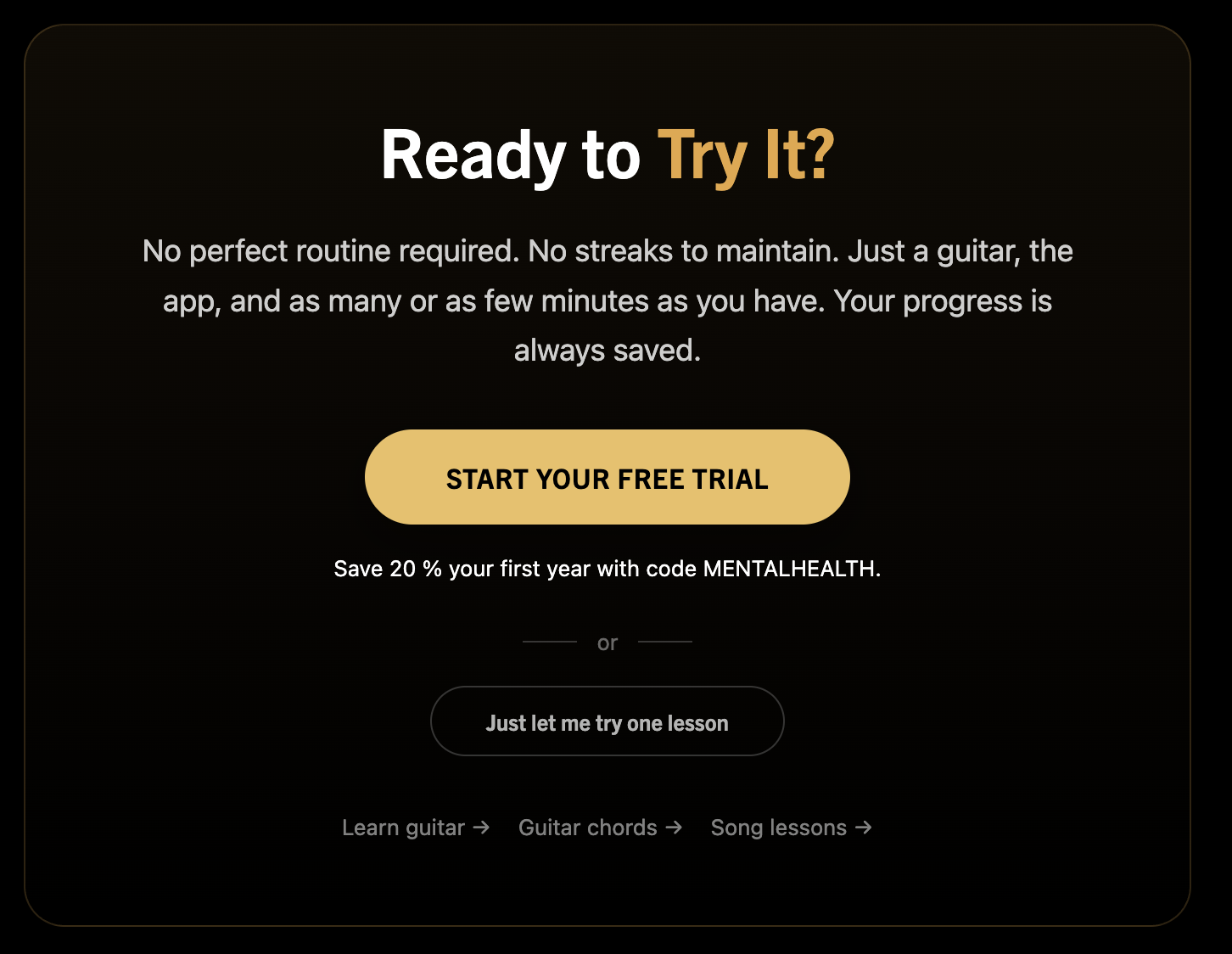
On the positive side, Zoundio (the company behind the app) has run seasonal promotions before — expect something similar around Black Friday
— and there's currently a code, MENTALHEALTH, for 20% off your first year.
How the song catalogue gets built
One thing worth knowing if you've ever wondered where the song library comes from: the Gibson App runs an open artist submission programme inviting musicians to pitch their own music to be turned into interactive lessons, sitting "alongside the legends" like Jimi Hendrix, Slash, and Brian May in the catalogue. Selected artists record in Guitar Pro format and get ready-made promotional video assets in return.
This helps explain why the catalogue keeps growing and leans toward certain genres or eras over others — it's partly demand-led, partly whoever applies and gets accepted.
Guitar for wellbeing: a new content push worth knowing about
Since my last review, the Gibson App has built out a whole cluster of condition-specific landing pages — covering Anxiety, Depression, PTSD, ADHD, and general Stress Relief, alongside a broader Mental Health page. Each one follows the same idea: short, low-pressure first sessions, no punishing streaks, and a fairly gentle "the app is a complementary practice, not a substitute for therapy" framing throughout.
A few practical things worth knowing if this speaks to you:
Code MENTALHEALTH gets you 20% off your first year across the Anxiety, Depression, PTSD, Stress, and general Mental Health pages
Code ADHD gets you the same 20% off first year, specifically via the ADHD-focused page
Whether or not the wellbeing framing resonates with you personally, it's worth knowing these pages and codes exist, since some genuinely offer better value than the standard promotional codes.
Separate student and military discounts (verified, not code-based)
The Gibson App also runs a completely separate discount mechanism, worth mentioning alongside the wellbeing offers since it's easy to miss: a student and military promotions page offering 50% off any subscription plan, verified through Student Beans (for students) or Beans iD (for military/veterans) rather than a manual promo code. You create a free account with whichever service applies, verify your status in a couple of minutes, and the discount unlocks automatically.
A few caveats worth flagging clearly to readers:
It can't be combined with any other discount, so it's an alternative to (not stackable with) the MENTALHEALTH, ADHD, or Black Friday codes.
This is explicitly a "50% off for life" locked-in rate, not a one-term discount, confirmed by both Gibson's own dedicated student and veterans pages, and by Student Beans' own listing.
The military/veterans route mentioned on the PTSD wellbeing page and this Student Beans-verified route are the same underlying offer, just reached from two different pages on the site.
Newsletter codes
It is also worth noting that the Gibson App sometimes offers a 20% subscription discount code in exchange for signing up for updates.
How it fits into a real practice routine
For a typical week, I'd suggest 15-20 minutes most days rather than long, infrequent sessions — the app is built for that kind of little-and-often use, and your progress no longer disappears if you miss a few days. Use the Skills tracker to spot what you're neglecting (timing, chord changes, a particular technique) and let that guide which lessons you pick next, rather than just following streaks for their own sake.
If you want a slower, more contemplative angle rather than the competitive league structure, the wellbeing-framed approach (short sessions, no pressure, no streak guilt) is effectively already built into the app — you can use it that way regardless of whether any of the specific conditions apply to you.
Pair it with a simple physical tuner or metronome app if you want backup for moments when the in-app tuner or timing feedback isn't available (e.g. practising without your phone mic active).
Bottom line and recommendation
The Gibson App remains my top recommendation for beginners and mobile-first learners, and the additions since my last review — proper skill tracking, a real community, and a more evolved wellbeing angle — all strengthen that. Zoundio also has a new hardware accessory, Zound I/O, in early access that should improve tone quality without a cable setup; it's not available yet, but worth watching if you're an electric player frustrated by mic-based feedback.
My one clear piece of advice: before committing to an annual plan, check exactly what's included in Premium versus Premium+, especially if a specific song or artist is your reason for signing up. Beyond that, if you're a late beginner or early intermediate player who wants guitar practice to feel less like homework, this is still the app I'd point you to first.
Next steps: if you're curious how it compares to a more structured, instructor-led alternative, check out my Pickup Music review, or head to my original Gibson App breakdown for the full story of how it got me back into consistent practice.
If you want to try the Gibson App for yourself, you can grab the 7-day free trial, cancel anytime with no credit card required here.
And if you’re weighing this up against other apps I’ve reviewed, my Pickup Music review is a good complementary read — the Gibson App is where I’d send a total beginner, and Pickup Music is where I’d send them next.
Subscribe to my newsletter to be alerted when new content is added.
Socials: Facebook | Instagram | YouTube
This review reflects the Gibson App as of September 2026. Features, pricing, and content counts change often — I’ll refresh this again as the platform evolves. AI was used in the process of writing this blog post but only to help structure and organise the content.
Frequently Asked Questions
-
Not exactly. Gibson licenses its name and brand to Zoundio, a Stockholm-based music technology company that actually builds and runs the app. Gibson's own site does feature and promote it (other than offering a ‘Free 3 months’ when you purchase a guitar on their website), and your subscription payment and billing will show up under Zoundio rather than Gibson — worth knowing so it doesn't look like an unrecognised charge on your statement.
-
Premium unlocks the full lesson and course library, AI feedback, and the digital amp. Premium+ adds everything in Premium plus access to "famous songs" and exclusive lessons from featured artists. This distinction is also the source of a genuine pricing-transparency complaint from some users, who found popular songs locked behind Premium+ after already subscribing to Premium — so it's worth checking which tier includes the songs you actually want before you commit to a year.
-
Yes, but with a noticeably lighter feature set. Several headline features — Leagues, the Digital Amp, Stop & Go, Continue Playing, and AI Personalised Feedback — remain iOS-only at the time of writing. If you're on Android, go in expecting a solid but reduced version of the full experience.
-
Yes, several, depending on your situation. The code MENTALHEALTH gets 20% off your first year and works across the Anxiety, Depression, PTSD, Stress, and Mental Health landing pages; the code ADHD gives the same 20% off via the ADHD-focused page. Separately, students and veterans can get 50% off for life through a Student Beans or Beans iD verification (not a manual code). Promo codes generally can't be combined, and none can be applied to an already-active subscription or trial, so check eligibility and apply before you sign up.
-
Not particularly. It's built and best suited for beginners through early intermediate players. Multiple independent reviewers, plus my own experience, agree the content thins out once you're past that stage, so advanced players looking for real depth in theory, improvisation, or genre-specific technique will likely want a different resource alongside or instead of it. I would personally recommend Pickup Music if this sounds like you.
-
Yes. The Gibson App runs an open submission programme for musicians who want their songs turned into interactive lessons alongside artists like Jimi Hendrix, Slash, and Brian May in the catalogue. Selected artists record their tracks in Guitar Pro format and receive ready-made promotional video content in return — which also helps explain why the song library keeps growing in certain directions more than others.
-
Not necessarily, especially as a beginner — the app is designed to work as a complete, self-guided path. That said, if you're chasing more advanced technique, want personalised correction on posture or technique, or plan to go deep into a specific style, pairing it with occasional lessons from a real teacher (in person or via a more structured platform) can fill in gaps the app isn't built to cover.