Is TrueFire Worth It in 2026? An Honest Review After Seven Years as a Subscriber

Disclosure: I've been a paying TrueFire subscriber since 2019 and I've renewed every year since with my own money. I am not currently a TrueFire affiliate but some links to other apps I mention (Guitar Tricks, Pickup Music, Gibson App) are affiliate links, which earn me a small commission at no cost to you. Nothing in this review was arranged with TrueFire, and they haven't seen it before publication.
Quick summary and verdict
Score: 9/10
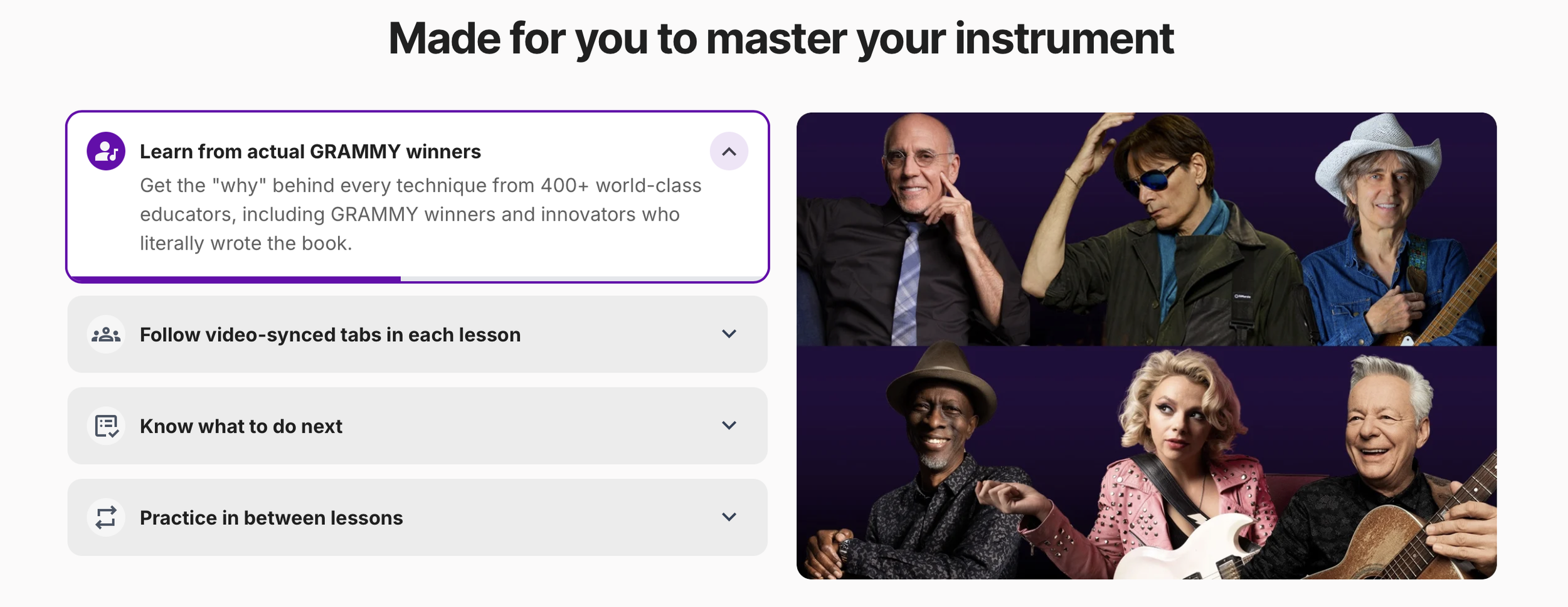
TrueFire is still the deepest library of guitar lessons on the internet: 85,000+ video lessons, 400+ instructors, and jam tracks with real bands. What's changed since I last wrote about it is that TrueFire has spent the past twelve months fixing the thing I (and almost everyone else) complained about: there was too much content and no clear route through it. Guitar Methods, a redesigned Browse menu with five difficulty levels, and a dashboard-first login have gone a long way to fixing that. Jam Packs and Multi-Track Jam Packs are now included, and In The Jam — which used to be a paid extra even for subscribers — now streams in the browser included for all access subscribers, but remains a paid-for option in-app.
The reason it isn't a 9.5 or a 10 is that what's included differs between the desktop browser and the apps. The apps themselves haven't been updated in over a year, and a couple of practice-tool bugs have been open for months. The desktop-vs-app inconsistency bleeds into pricing too — check both before you subscribe so you pick the cheapest route in (you get full access on every device whichever way you sign up).
At a glance:
• Price: All Access is billed in US dollars for everyone: $143.88 a year (advertised as $11.99/month) or $29.99 month-to-month on the website. Sales at $79–$99 a year happen frequently.
• Free trial: 7 days (it used to be 14). A 14-day satisfaction guarantee sits on top of that.
• Platforms: Web browser (best experience), iOS and Android apps, TrueFire 3 desktop app for Mac, Windows and Linux, Apple TV and Chromecast.
• Levels: Beginner to advanced. Now genuinely usable by beginners thanks to the Guitar Methods, but still strongest from late beginner upwards.
• Best for: Late-beginner to advanced adult players who want depth, world-class instructors and serious practice tools, and who are happy to follow a Method or build their own path.
Who this app is for (and not for)
It’s a great fit if you are:
• A late beginner or intermediate player who has outgrown "here's a G chord" apps and wants to work on technique, phrasing, theory and improvising with proper teachers.
• An intermediate or advanced guitarist who wants to study with specific players — Tommy Emmanuel, Robben Ford, Steve Vai, Larry Carlton, Ariel Posen, Sophie Lloyd, Mark Lettieri, Eric Gales and hundreds more.
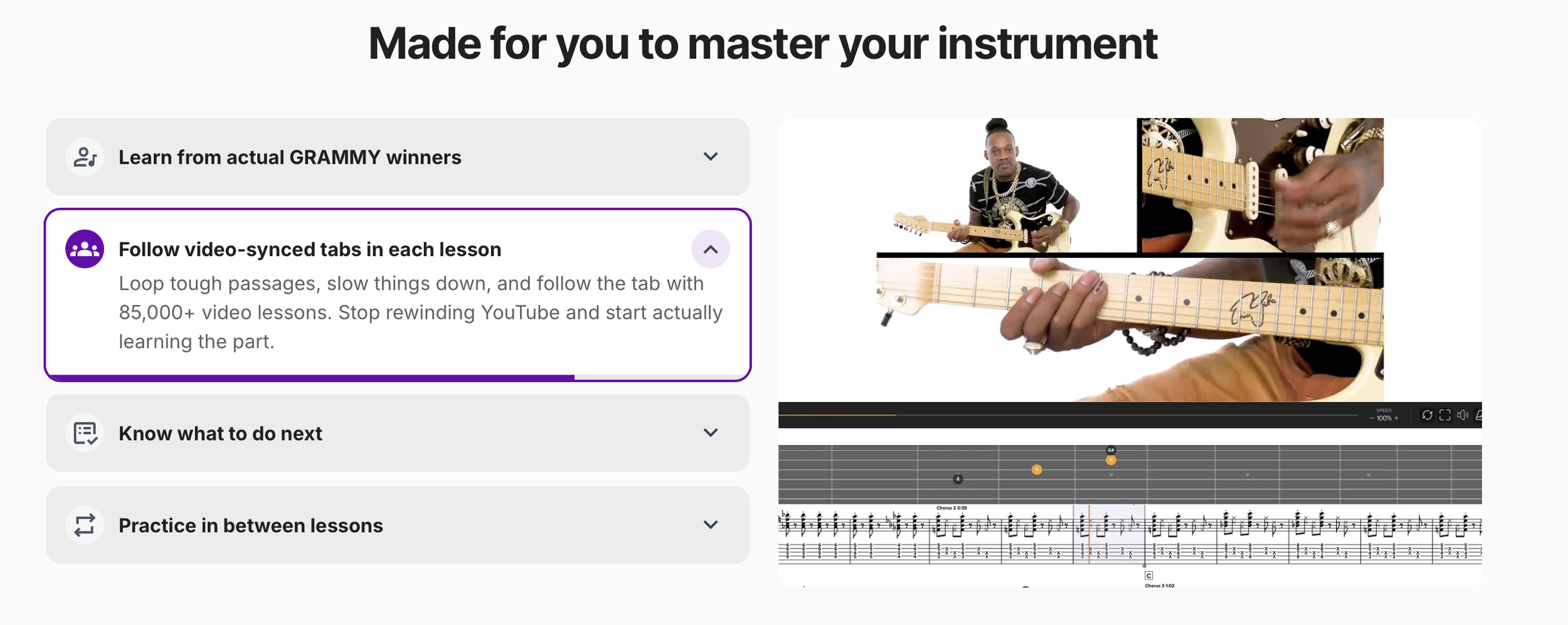
• Someone who learns by looping and slowing down: TrueFire's video player with synced tab, fretboard and slow-motion is still the best in the business.
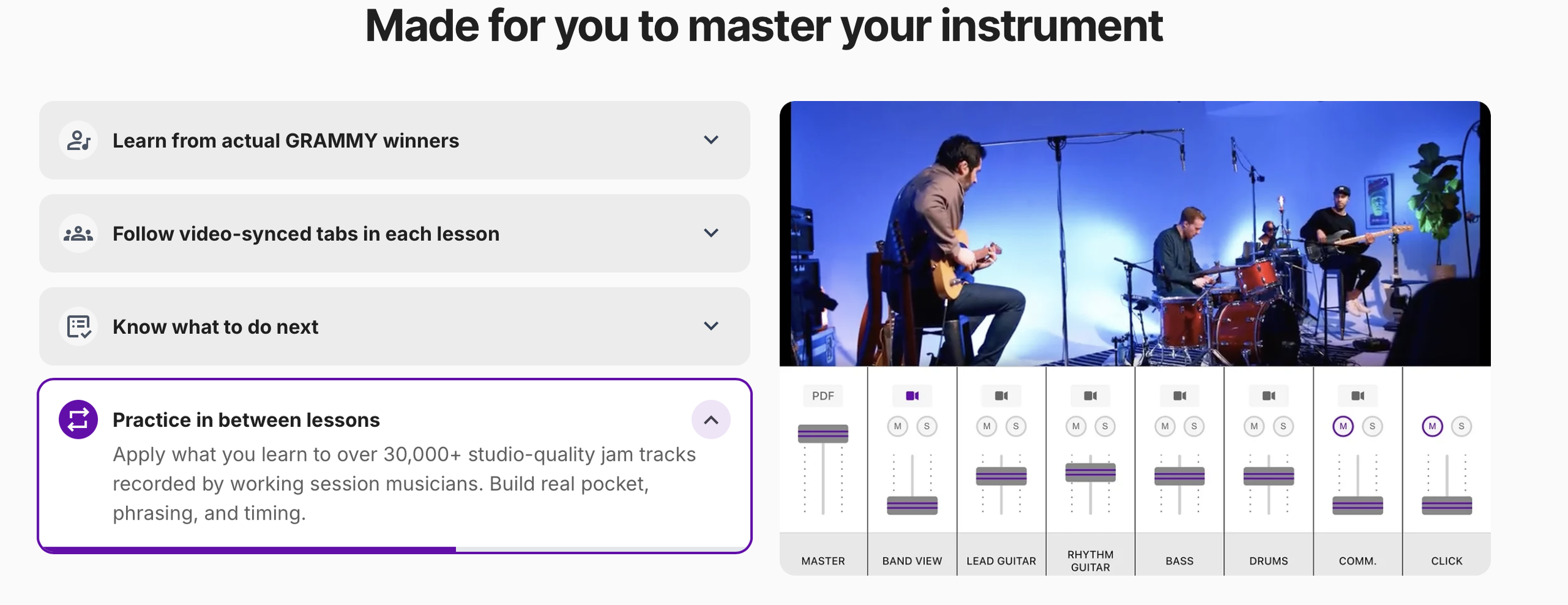
• A player who wants to jam. In The Jam and the multi-track Jam Packs let you mute the lead guitar and sit in with a real band. Jam Packs are now included everywhere, and In The Jam streams in the browser on All Access.
• A complete beginner who wants a curriculum and is prepared to stick to the Beginner Guitar Method rather than wander the library. This is new — a year ago I'd have sent you elsewhere.
It’s probably not right if you are:
• A song-first learner. TrueFire will make you a better guitarist, but if your goal is a setlist of popular songs, Guitar Tricks or JustinGuitar's song libraries are bigger and more current. TrueFire knows this too — its 2026 partnership with Chordify was pitched as "TrueFire builds your skills, Chordify gives you the songs".
• Someone who needs real-time note recognition telling you whether you played the right note. TrueFire still doesn't do this. The new "Riff" AI assistant recommends lessons; it doesn't listen to you play.
• A mobile-only learner who wants a polished, frequently updated app. The iOS app hasn't been updated since May 2025 and the desktop app since December 2023. The website is where the development effort has gone.
• A classical guitarist looking for a graded repertoire path. There's classical content (I use Andrew Leonard's and Fareed Haque's courses), but tonebase is built for that.

How the app teaches
TrueFire now has three layers, and understanding them is the key to not feeling overwhelmed.
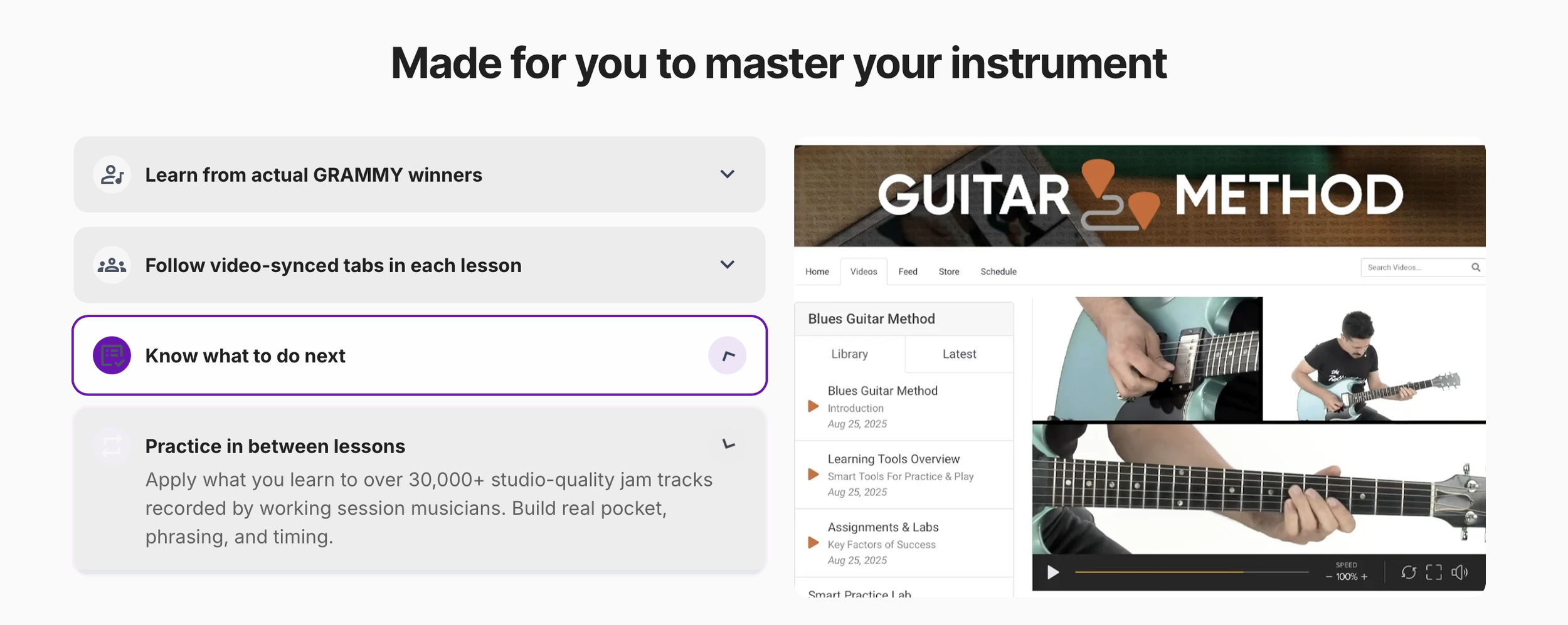
Guitar Methods (launched September 2025, included in All Access since May 2026). These are the structured curricula TrueFire never had. Each Method — Beginner, Blues, Fingerstyle, Jazz and Rock so far — pulls lessons from multiple instructors into an ordered path with study guides, assignments and hands-on "Labs". You can record and submit assignments for feedback from TrueFire's staff educators, there's a private community for each Method, and finishing one earns you $20 of TrueFire Cash. In practice, a Method turns TrueFire from a library into a course.
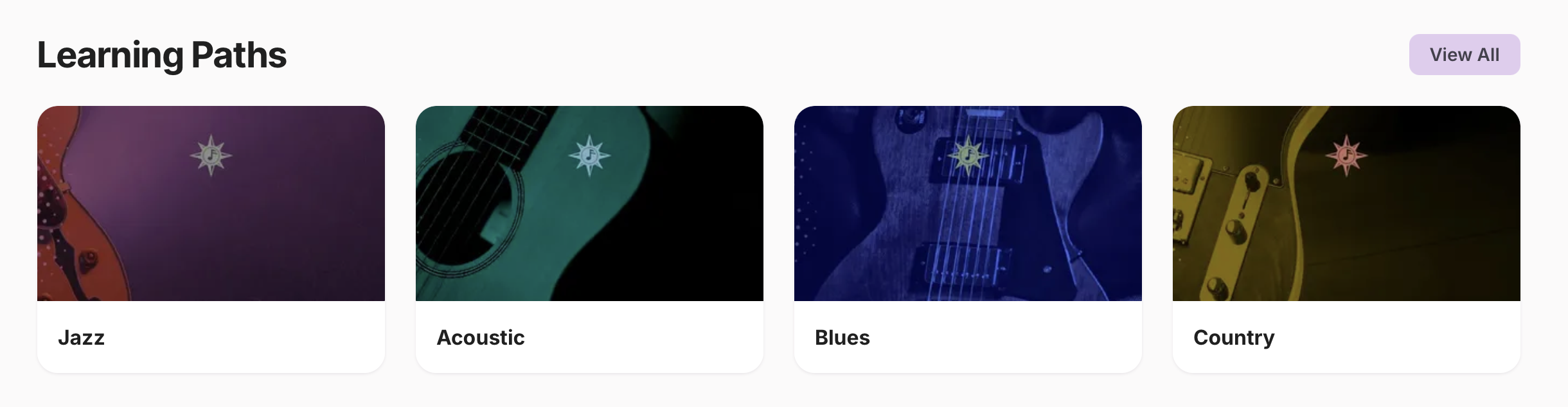
Learning Paths, courses and jams are the classic TrueFire experience. Every course follows a similar rhythm: an overview, a full performance, a breakdown of each section, and a practice section with a backing track. Most lessons come with synced tab and a Guitar Pro or PDF download.
Live and community. Free weekly livestreams on YouTube, All Access-only Zoom "office hours" Q&As with educators, a free ten-week Guitar Bootcamp each January, monthly "Ask the Artist" threads on the community forum, and the new Guitar Lab podcast (audio versions of courses such as Brad Carlton's Art of Practicing — useful in the car, less useful if you were hoping for interviews).
Feedback and progress tracking are the honest weak spot. Outside the Methods there's no human or automated feedback on your playing. Progress is tracked by manually marking lessons In Progress or Complete — still a couple more clicks than I'd like — although Methods track progress automatically as you work through assignments.

Key features and experience
• The video player. Synced interactive tab, adjustable layouts (tab under, side-by-side or full screen), fretboard and piano views, looping marked directly on the tab, slow-motion, and an audio-only backing track with click. Nothing else in this space matches it.
• Guitar Methods. Five curated paths with assignments and staff feedback. The one catch: on All Access you stream them in a web browser only. Buying a Method outright ($29.99 list, often $20.99 on sale) unlocks it in the apps and gives you lifetime access.
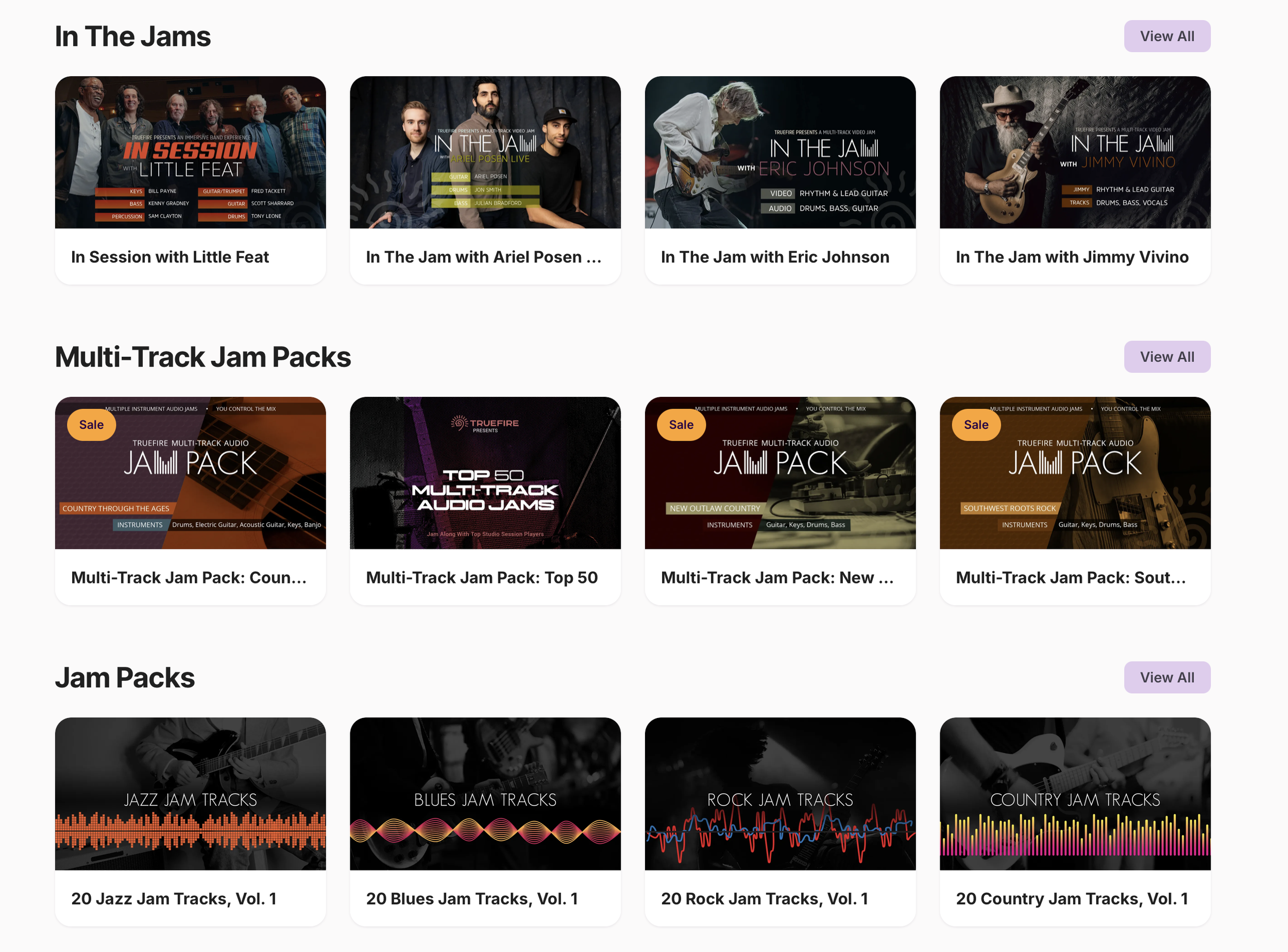
• In The Jam and Jam Packs. Play with real bands, choose which instrument to mute, and study how the pros approach the same changes. Since May 2026 the Jam Packs and Multi-Track Jam Packs are included in All Access, and every In The Jam title streams on All Access in the desktop browser. In the iOS and Android apps it's a different story: In The Jam titles still have to be bought (with the 25% subscriber discount + any other sale applied) or claimed with your TrueFire Cash credit, and Jam Packs still show a price tag even though, once you tap through, they download for free. It works, but it's confusing, and TrueFire needs to bring the apps in line with the website.
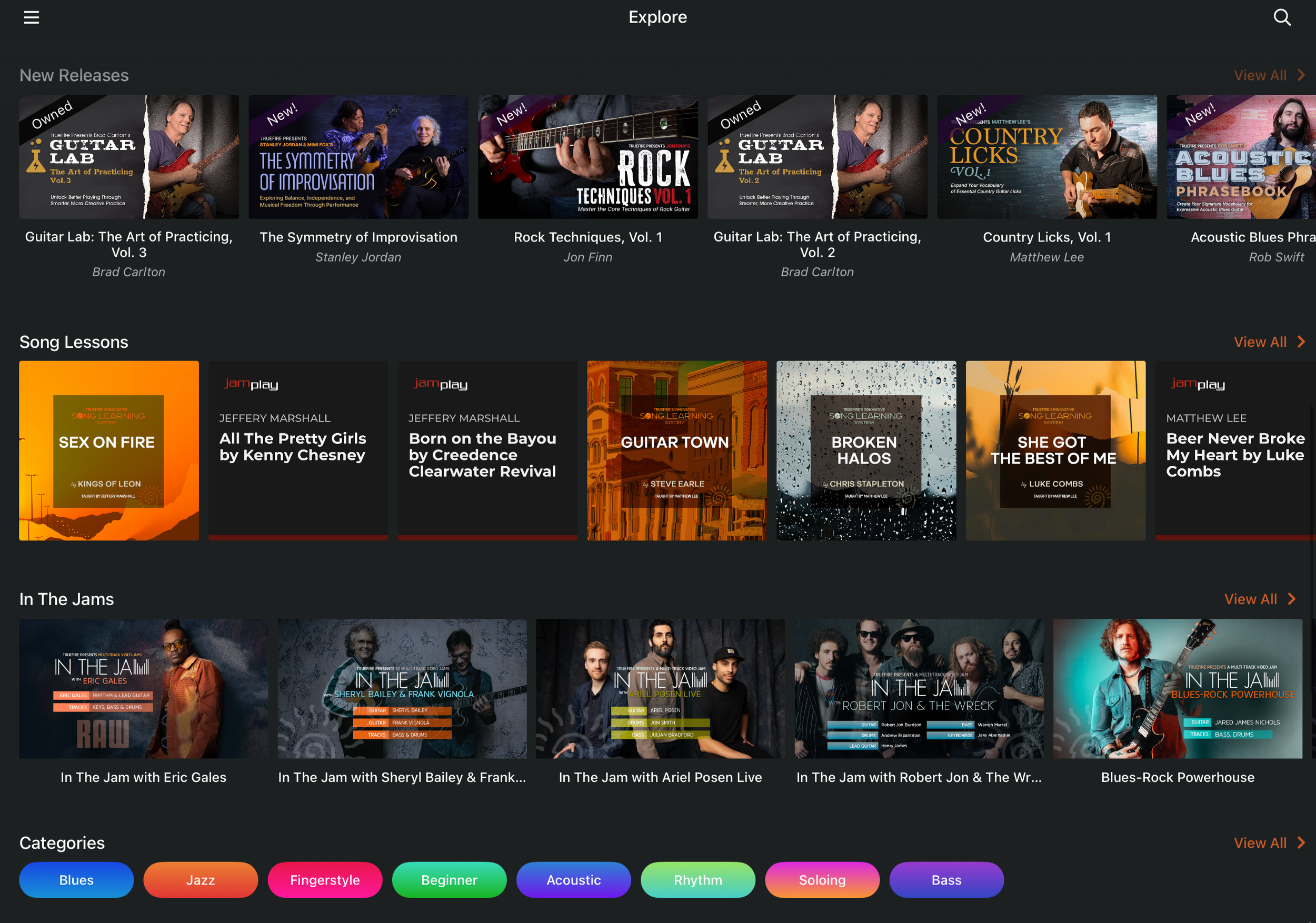
• The new Browse experience (May 2026). Log in and you land on your Dashboard; everything else lives under one Browse menu. You can now browse the whole library by five difficulty levels, which alone removes a lot of the old "where do I start?" friction. TrueFire's product team has said better search, a reimagined homepage and consolidated playlists are next.
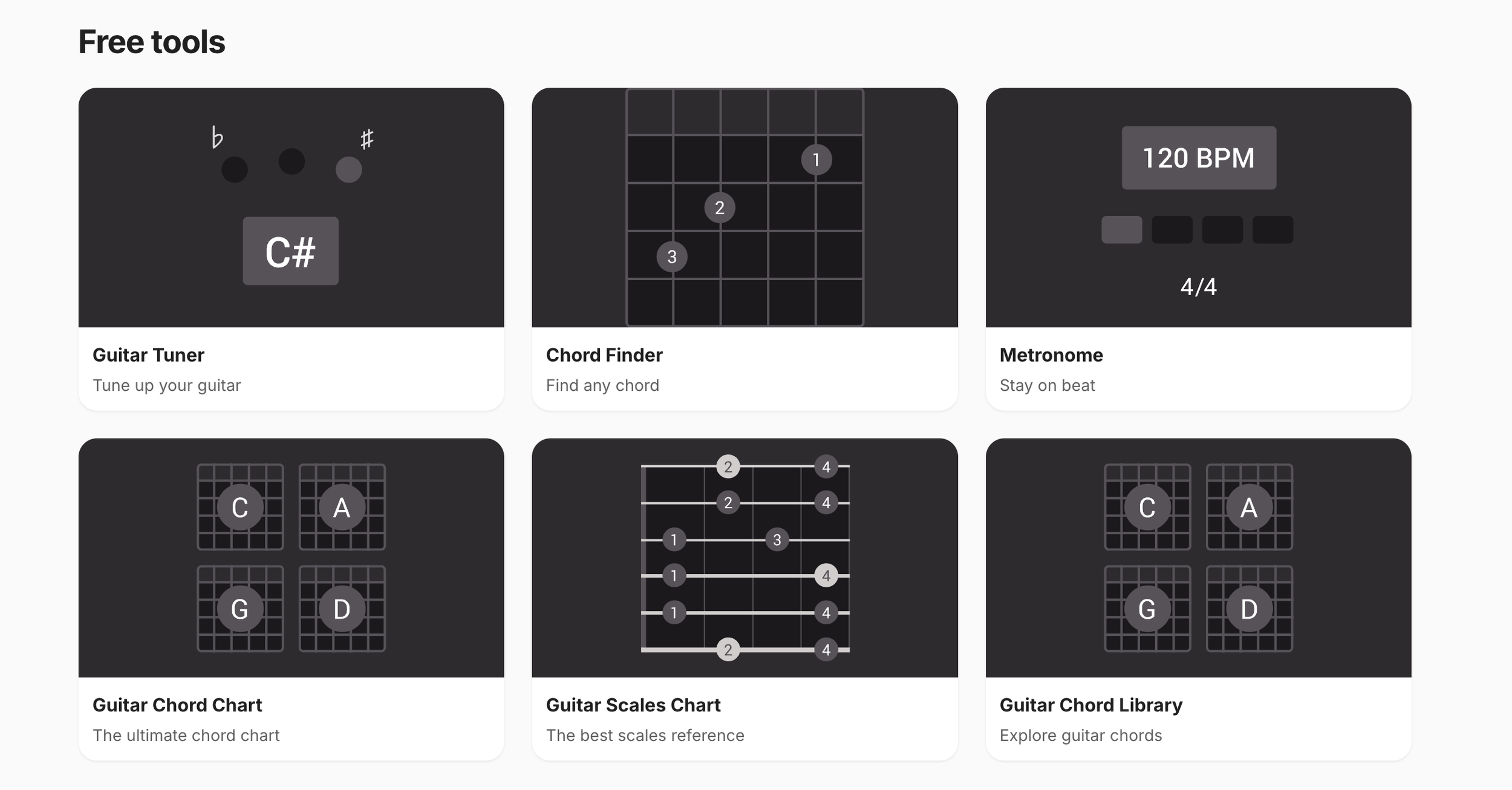
• Free interactive tools (beta, June 2026). Circle of fifths, an ear-training game, a modes and scales explorer, a chord progression generator, a fretboard note trainer and a skill assessment — all free, no subscription needed, alongside the existing tuner, metronome and chord finder.
• Riff (beta). A conversational assistant that suggests lessons based on what you tell it. Early days; some forum members found it got in the way. Treat it as a nice-to-have.
• TrueFire for Chrome extension 2.0 (August 2026). Remembers your player layout, zoom, speed and volume between lessons, adds a fill-window mode and jam-track speed control. This started life as a helper script written by a student and fixes a complaint that goes back years. If you learn on a laptop, install it.
• Ownership. Any course can be bought outright for offline, out-of-subscription use, and All Access members get one free Guitar Lab course download a month plus 25% off downloads. Over a few years you build a library you actually own.
• Apps. The iOS and Android apps sync progress and favourites, download for offline viewing and are perfectly usable — but they're frozen in time. TrueFire 3 for desktop still works and I used to open it instead of a browser; it's now Intel-only on Mac and some users are seeing macOS warnings that it may stop working. Do your serious practising in the browser.
Strengths
• Unmatched depth and teacher quality. No other platform lets you spend a month with Tommy Emmanuel and the next with Robben Ford, then drill jazz comping with Fareed Haque.
• Practice tools that respect how guitarists actually learn. Synced tab, looping on the tab itself, slow-mo, backing tracks and jam tracks are baked into every lesson rather than bolted on.
• Guitar Methods give beginners and lapsed players a real curriculum. This was the missing piece, and it's now included in the subscription.
• Value for money keeps improving. In the past year All Access gained Methods, In The Jam streaming in the browser, the Jam Packs and Multi-Track Jam Packs, instant access to new courses and a bigger download discount — for the same headline price.
• A visible, responsive product team. TrueFire's Chief Product Officer posts roadmap updates and answers questions on the community forum, and the Chrome extension shows they'll adopt good ideas from students. That's rare.
Limitations and trade-offs
• The apps have stalled, and what's included depends on where you log in. iOS last updated May 2025, desktop December 2023. Methods and In The Jam stream in the browser only; in the apps, In The Jam is credit-or-purchase and the Jam Packs display prices they no longer charge. Two subscribers on the same plan can see two different products depending on the device in their hand. If the website redesign trickles down to the apps this becomes a non-issue; right now it isn't.
• Open practice-tool bugs. The count-in has been silent and the metronome missing from the web player since June 2026, and it was still open when I wrote this. For a practice-focused platform that stings.
• Choice overload hasn't gone away. One forum member called it "the beauty and agony of TrueFire" and that's about right. The Methods and difficulty filters help, but you still need a plan.
• Song library and presentation. Popular-song coverage is thinner than Guitar Tricks, and some of the older courses look and sound like the 2000s. The instructor line-up also remains heavily US-based.
• Marketing numbers and trial length are inconsistent. TrueFire's own pages quote anywhere from 1,000 to 2,000+ courses, and a few older pages still say "14-day trial" when checkout says 7. Nothing dishonest, just untidy, and it reflects a site with 25 years of pages.
Pricing, trials and value for money
TrueFire bills in US dollars on its website regardless of where you live, so non-US readers should expect a currency conversion and possibly a non-local currency fee on top.
Website:
All Access Annual: $143.88 a year, advertised as $11.99/month and "42% off" a list price of about $250. In my experience the $143.88 price is the everyday price; the $250 figure is rarely what anyone pays.
All Access Monthly: $29.99 a month.
All Access Plus: $199 a year, bundling All Access with IK Multimedia's AmpliTube 5 MAX and TONEX MAX amp-modelling software. Good value if you'd buy the IK software anyway.
In the iOS app: All Access Annual is £119.99 in the UK and $119.99 in the US. For once the in-app price is actually lower than the website's everyday price for UK buyers — but check what promotion the website is running first, because the sales below are only available there.
Sales worth waiting for (all confirmed in the past year):
Black Friday 2025: $79 a year, then $99 with a 30%-off code on downloads.
Back to School, August 2026: $7.99/month billed annually (about $96) plus a free year of Chordify Premium Plus.
Labor Day, September 2026: $79 a year.
Occasional flash offers as low as $55 a year have been reported by members.
The important trick, which TrueFire doesn't shout about: you can buy a promotional renewal before your current year ends and it simply extends your expiry date. I've renewed on the Black Friday deal every year since my first full-price year in 2019. Never pay $143.88 if you can plan a few months ahead.
Trials and refunds: 7 days free with the full library, a 14-day 100% satisfaction guarantee (refund, credit or exchange), cancel anytime, and your price is locked for the term you've paid for.
Also available: individual courses (roughly $20–$50, often half price, yours for life), Methods at $29.99 list, and private lessons with TrueFire educators — pricing is no longer shown publicly, so ask before you assume.
Value frame: at a $79–$99 sale price, a year of TrueFire costs less than two in-person lessons in the UK. At $143.88 it's about three. Against Guitar Tricks ($214.80 renewal, cheaper first year) it's comparable or cheaper, and against Pickup Music ($179.99 a year) it's cheaper with a much bigger library but far less structure and no human feedback outside the Methods.

How it fits into a real practice routine
Here's how I'd use TrueFire as an adult with three or four 30–45 minute sessions a week:
Weekly template
Pick one Method or one course and commit for the month. Don't browse. The Beginner Method if you're starting; Blues, Rock, Jazz or Fingerstyle if you have the basics; a single instructor course if you're intermediate and know what you want.
Session 1–2 (25 min): the next lesson or assignment in your Method. Loop the hard bar on the tab, slow it to 75%, then bring it up to speed with the backing track.
Session 3 (20 min): one jam. In the browser, load an In The Jam or a Jam Pack in your key and style, mute the lead, and improvise with whatever you learned this week. On the app, use any cash credit or decide to buy the In The Jam you'll come back to most and want to keep regardless of whether you continue to subscribe.
Weekly (10 min): record and submit your Method assignment, or post a clip in the Method community. If you're not on a Method, use the free skill assessment once a quarter to check you're actually progressing.
Monthly: claim your free Guitar Lab download — after a year you own twelve courses regardless of whether you renew.
Pair it with: the TrueFire Chrome extension (saves you resetting the player every lesson), a standalone metronome app while the built-in one is broken, and Chordify or Songsterr if you want popular songs alongside the technique work. If you're a classical player, tonebase sits happily next to it.
Bottom line and recommendation
A year ago TrueFire was the app I recommended to serious players with the caveat "if you can cope with the overwhelm". In 2026 the caveat is smaller. Guitar Methods, the difficulty filters, the redesigned Browse menu and the inclusion of the Jam Packs and In The Jam streaming have made it a much more coherent product for the same money, and the team behind it is visibly listening.
Try it if:
You're a late beginner or intermediate player who wants depth and world-class teachers, and you'll follow a Method or a plan.
You learn best by looping, slowing down and playing along with real bands.
You want to own some of what you learn rather than rent all of it.
During your 7-day trial, check:
Start a Guitar Method within the first day — it's the fastest way to see whether TrueFire's structure suits you.
Test the web player's looping, slow-mo and backing track on a lesson that's slightly too hard for you.
Try one In The Jam with the lead guitar muted — in the browser, where it's included.
Open the iOS or Android app and decide whether its age bothers you. It's fine for watching; it's not where the new features are.
Set a calendar reminder for day 6. TrueFire sends one too, but don't rely on it.
Skip it if:
You want a setlist of popular songs above all else.
You need real-time feedback on your playing.
You want a slick, app-first experience on your tablet or phone.
Next steps: I'll be posting a TrueFire walkthrough video soon on the channel showing the Beginner Method and the new Browse experience, and my best guitar learning apps for 2026 roundup explains where TrueFire sits against Guitar Tricks, Pickup Music, JustinGuitar and the rest. If you're deciding between TrueFire and Pickup Music specifically, my Pickup Music review is the companion read — Pickup Music for structure and feedback, TrueFire for depth and teachers.
Subscribe to my newsletter to be alerted when new content is added.
Socials: Facebook | Instagram | YouTube
This review reflects TrueFire as of September 2026. Pricing, promotions and content counts change often — I'll refresh this as the platform evolves. AI was used in the process of writing this blog post but only to help structure and organise the content.
Frequently Asked Questions
-
It is now, with one condition. A year ago I'd have pointed complete beginners to the Gibson App or JustinGuitar first, because TrueFire dropped you into 85,000 lessons with no obvious starting point. The Beginner Guitar Method, launched in late 2025 and included in All Access since May 2026, changes that: it's an ordered curriculum with assignments, study guides and feedback from TrueFire's staff educators. The condition is that you commit to it and ignore the rest of the library for your first couple of months. If you want a game-style app that listens to you play and rewards you with stars, the Gibson App or Yousician will suit you better in the very early days; come to TrueFire when you've got your first chords and want to become a better musician.
-
TrueFire bills in US dollars on its website wherever you live. All Access is $143.88 a year (advertised as $11.99 a month) or $29.99 month-to-month, and your card will convert that to sterling at its own rate — roughly £105–£115 for the annual plan at the time of writing, plus any non-sterling fee. In the iOS app the annual plan is £119.99. Sales at $79–$99 a year run several times a year (Black Friday, Back to School, Labor Day), and you can buy a sale renewal before your current year ends to extend your expiry date, which is what I've done since 2019.
-
The same website prices apply: $143.88 a year or $29.99 a month for All Access, $199 a year for All Access Plus with the IK Multimedia amp-modelling bundle, and $119.99 a year if you subscribe through the iOS app. Individual courses run roughly $20–$50 with frequent half-price sales, and Guitar Methods are $29.99 list to own outright.
-
Yes, seven days with the full All Access library. It used to be fourteen, and a few of TrueFire's older pages still say so, but checkout and the FAQ say seven. On top of that there's a 14-day 100% satisfaction guarantee (refund, credit or exchange) and you can cancel any time from your account. My advice: start a Guitar Method on day one, test the web player's looping and slow-motion on something slightly too hard for you, and set your own reminder for day six.
-
Partly, and this is the most confusing part of the current offer. Since May 2026 all Jam Packs and Multi-Track Jam Packs are included with All Access, and every In The Jam title streams in the desktop browser. In the iOS and Android apps, though, In The Jam still has to be bought — at a 25% subscriber discount — or claimed with credit. Jam Packs in the app still show a price even though they download free once you tap through. It all works, but TrueFire needs to bring the apps in line with the website.
-
Jam Packs are collections of backing tracks in a given style and key for you to play over. Multi-Track Jams add the ability to mute individual instruments in the mix. In The Jam goes a step further: you're in a virtual session with a named artist and a real band, you can pull the lead guitar out and take their seat, and the artist's playing is broken down so you can study how they approach the same changes. In The Jam is the one I'd use to test whether TrueFire's jam features are for you.
-
Pick one; don't pay for both. Guitar Tricks (7.5/10 in my roundup) wins on popular songs — its library is bigger and more current — and its Core Learning System is a gentler on-ramp for beginners. TrueFire wins on instructors, depth and practice tools: synced interactive tab that Guitar Tricks doesn't have, hundreds of teachers versus a few dozen, and jam tracks with real bands. Both platforms discount heavily, so compare the offers on the day rather than the list prices. If your goal is a setlist, Guitar Tricks. If your goal is to become a better player, TrueFire.
-
These two are less alike than people assume. Pickup Music (9.5/10) is structured pathways, human video feedback on your playing, weekly live group lessons and a modern app for guitar, bass and piano. TrueFire is a far larger library with more famous teachers, the best video player in the business, and jams — but structure is optional and feedback only exists inside the Guitar Methods. Reddit threads asking this question tend to conclude "start with Pickup, then move to TrueFire", and I think that's about right for an intermediate player. Pickup costs $179.99 a year against TrueFire's $143.88, or much less on a TrueFire sale.
-
JustinGuitar (9/10) is roughly 90% free and has the clearest beginner-to-intermediate grade system anywhere, so for a complete beginner on a budget it's still my default. TrueFire is where I'd go when you've finished Justin's Grade 3 or 4 and want to study a style in depth with the people who play it for a living. Plenty of players use Justin for structure and TrueFire for depth, and the two don't overlap much.
-
Only what you've downloaded or bought. Streaming access ends with your subscription, but any course you purchased outright is yours for life, and All Access members get one free Guitar Lab course download every month. Over a year that's twelve courses you own regardless of whether you renew, which is one of the quieter reasons the subscription is good value.
-
Yes, there are iOS and Android apps that stream and download lessons for offline use and sync your progress with the website. Be aware that the iOS app was last updated in May 2025 and the newest features — Guitar Methods on All Access, In The Jam streaming, the redesigned Browse menu, the free learning tools — are browser-only. The apps are fine for watching lessons on the sofa; do your serious practice in a desktop browser.
-
There is — TrueFire 3 for Mac, Windows and Linux, plus Apple TV and Chromecast — but it hasn't been updated since December 2023 and is Intel-only on Mac, so some users are seeing macOS warnings that it may stop working. I used to open it instead of a browser; these days the browser with the TrueFire Chrome extension is the better experience.
-
Not automatically. There's no real-time note recognition of the kind the Gibson App or Yousician offer, and the new "Riff" AI assistant recommends lessons rather than listening to you. The exception is the Guitar Methods, where you can record and submit assignments for feedback from TrueFire's staff educators. Private lessons with TrueFire instructors are also available as a paid extra, though the pricing is no longer published.
-
You can, but it isn't the platform's strength. There are song lessons and genre Song Packs, each following TrueFire's usual pattern of overview, full performance, section breakdown and practice with a backing track, and JamPlay's song lessons have been folded into the library. For popular-song coverage Guitar Tricks, JustinGuitar or Chordify are better; TrueFire itself partnered with Chordify in 2026 precisely because it knows this.
-
There's a respectable amount — I use Andrew Leonard's and Fareed Haque's courses — and the piano and fretboard views in the player are useful for reading. But there's no graded classical pathway, so if classical is your main focus, tonebase is the specialist option and TrueFire is a good supplement rather than a replacement.
-
Three habits. Pick one Guitar Method or one course and commit for a month before browsing anything else. Use the Browse-by-difficulty filter (five levels, added in 2026) so you only see lessons at your level. And build a weekly routine — two lesson sessions, one jam, one assignment or clip for feedback — rather than opening the site and seeing what catches your eye. The "beauty and agony of TrueFire", as one forum member put it, is entirely manageable with a plan.